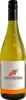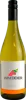
Winery FontezoppaJajà Passerina
 White wine


In the mouth this white wine is a with a nice freshness.
This wine generally goes well with vegetarian, appetizers and snacks or lean fish.
Taste structure of the Jajà Passerina from the Winery Fontezoppa
Light | Bold | |
Dry | Sweet | |
Soft | Acidic |
In the mouth the Jajà Passerina of Winery Fontezoppa in the region of Marche is a with a nice freshness.
Food and wine pairings with Jajà Passerina
Pairings that work perfectly with Jajà Passerina



Original food and wine pairings with Jajà Passerina


The Jajà Passerina of Winery Fontezoppa matches generally quite well with dishes of pasta, vegetarian or appetizers and snacks such as recipes of pho soup, spinach and goat cheese quiche or parmesan and poppy seed tuiles (5th meeting).
Details and technical informations about Winery Fontezoppa's Jajà Passerina.
Discover the grape variety: Muscat Valvin
Interspecific crossing between the muscat du moulin or 299-35 Couderc (Pédro Ximénès x 603 Couderc (carignan noir x vitis rupestris) and the muscat ottonel obtained in 1962 by Bruce Reisch and Thomas Henick-Kling at the Experimental Station of the Cornell University - Geneva - New York (United States) Apart from this country, it is almost unknown in other wine-producing countries.
Last vintages of this wine

The best vintages of Jajà Passerina from Winery Fontezoppa are 2016, 2017, 2018, 0 and 2019.
Informations about the Winery Fontezoppa
The Winery Fontezoppa is one of of the world's great estates. It offers 55 wines for sale in the of Marche to come and discover on site or to buy online.

The wine region of Marche
Marche (or Le Marche; pronounced Mar-kay) is a region in eastern CentralItaly. It is most associated with white wines made from Trebbiano and Verdicchio grapes. Marche occupies a roughly triangular area. Its longer sides are formed by the Apennine Mountains to the west and the Adriatic Sea to the east.
The word of the wine: Food and wine pairing
It is the set of techniques that allow for the pleasant combination of food and wine. Food and wine pairing is based on a few basic principles, such as similarity, complementarity or contrast, and involves all the elements that make up the wine and the food (flavours, textures, aromas, etc.).