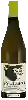
Château FontarècheDomaines de Lamy Fontarèche Blanc
 White wine



In the mouth this white wine is a with a nice freshness.
This wine generally goes well with vegetarian, poultry or lean fish.
Taste structure of the Domaines de Lamy Fontarèche Blanc from the Château Fontarèche
Light | Bold | |
Dry | Sweet | |
Soft | Acidic |
In the mouth the Domaines de Lamy Fontarèche Blanc of Château Fontarèche in the region of Pays d'Oc is a with a nice freshness.
Wine flavors and olphactive analysis


On the nose the Domaines de Lamy Fontarèche Blanc of Château Fontarèche in the region of Pays d'Oc often reveals types of flavors of vanilla, non oak or oak and sometimes also flavors of spices, citrus fruit or red fruit.
Food and wine pairings with Domaines de Lamy Fontarèche Blanc
Pairings that work perfectly with Domaines de Lamy Fontarèche Blanc



Original food and wine pairings with Domaines de Lamy Fontarèche Blanc


The Domaines de Lamy Fontarèche Blanc of Château Fontarèche matches generally quite well with dishes of pasta, vegetarian or poultry such as recipes of tagliatelle with carbonara, leek, goat cheese and bacon quiche or chicken ballotine with ham and mushrooms.
Details and technical informations about Château Fontarèche's Domaines de Lamy Fontarèche Blanc.
Discover the grape variety: Cornalin du Valais
Very old vine cultivated in the Swiss Valais, resulting from a natural crossing between the petit rouge(*) and the mayolet. It is the father of red humagne, also called cornalin d'Aoste, the grandfather of durize or petit rouge du Valais or rouge de Fully and a relative of goron. - Synonymy: old red of Valais, red of the country in Switzerland, landroter (for all the synonyms of the grape varieties, click here!). - Description: medium-sized bunches, cylindrical, winged, compact, strong medium-sized peduncles with little lignification; medium-sized berries, spherical or short elliptical, skin of a beautiful bluish black colour with a lot of bloom. The foliage turns completely red in the fall. - Production potential: early budding in the year. Capricious and difficult variety. Particularly likes the limestone soils of well exposed hillsides that warm up quickly enough, lean and well drained. Semi-erect bearing, vigorous with irregular production. Resists well to winter frosts. Susceptible to the main diseases, especially to oidium and grey rot. Also susceptible to magnesium deficiency and stalk dehydration. Maturity: 3rd early season
Last vintages of this wine
The best vintages of Domaines de Lamy Fontarèche Blanc from Château Fontarèche are 2015, 2018, 2014, 2013 and 2016.
Informations about the Château Fontarèche
The Château Fontarèche is one of of the world's greatest estates. It offers 30 wines for sale in the of Vin de Pays to come and discover on site or to buy online.

The wine region of Vin de Pays
Vin de Pays (VDP), the French national equivalent of PGI (Protected Geographical Indication) at the European level, is a quality category of French wines, positioned between Vin de Table (VDT) and Appellation d'Origine Contrôlée (AOC). This layer of the French appellation system was initially introduced in September 1968 by the INAO, the official appellation authority. It underwent several early revisions in the 1970s, followed by substantial changes in September 2000 and again in 2009, when all existing VDT titles were automatically registered with the European Union as PGI. Producers retain the choice of using either the VDP or PGI titles on their labels, or both - in the form "IGP-Vin de Pays".
The wine region of Pays d'Oc
Pays d'Oc is the PGI for red, white and rosé wines that are produced over a wide area of the southern coast of France. The PGI catchment area corresponds roughly to the Languedoc-roussillon">Languedoc-Roussillon wine region, one of the largest wine regions in France. The area covers all wines that are not produced under the strict laws that govern AOC-level appellations in the regions: among them, Corbières, Minervois and the Languedoc appellation itself. The Pays d'Oc PGI is arguably the most important in France, producing the majority of the country's PGI wines.
The word of the wine: Balance
Harmony of the different organoleptic elements of a wine. The balance is linked to the typicity of each wine. The sweetness of a sweet wine is an element of its balance, whereas a Sancerre or a Chablis will be asked to be lively and dry.