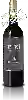
Château FontanePourpre & Or
 Red wine
This wine generally goes well with beef, veal or pasta.
Food and wine pairings with Pourpre & Or
Pairings that work perfectly with Pourpre & Or



Original food and wine pairings with Pourpre & Or
The Pourpre & Or of Château Fontane matches generally quite well with dishes of beef, pasta or veal such as recipes of kafta bil saniyeh (lebanese dish), pasta gratin milanese style or chicken bonne femme.
Details and technical informations about Château Fontane's Pourpre & Or.
Discover the grape variety: Hibou noir
Very old grape variety cultivated in northern Italy in the Piedmont region. It would have been introduced in Savoy at the beginning of the 17th century. An A.D.N. study, dating from 2011, shows that Hibou noir and Avana are one and the same variety. It should also be noted that Amigne is its half-sister, Rèze its grandmother and Rouge du Pays (a variety from the Swiss Valais) its grandfather.
Informations about the Château Fontane
The Château Fontane is one of of the world's greatest estates. It offers 4 wines for sale in the of Languedoc to come and discover on site or to buy online.

The wine region of Languedoc
Languedoc (formerly Coteaux du Languedoc) is a key appellation used in the Languedoc-Roussillon wine region of southern France. It covers Dry table wines of all three colors (red, white and rosé) from the entire region, but leaves Sweet and Sparkling wines to other more specialized appellations. About 75% of all Languedoc wines are red, with the remaining 25% split roughly down the middle between whites and rosés. The appellation covers most of the Languedoc region and almost a third of all the vineyards in France.
The wine region of Languedoc-Roussillon
Languedoc (formerly Coteaux du Languedoc) is a key appellation used in the Languedoc-Roussillon wine region of southern France. It covers Dry table wines of all three colors (red, white and rosé) from the entire region, but leaves Sweet and Sparkling wines to other more specialized appellations. About 75% of all Languedoc wines are red, with the remaining 25% split roughly down the middle between whites and rosés. The appellation covers most of the Languedoc region and almost a third of all the vineyards in France.
The word of the wine: Rough
Wine without finesse with rough tannins.