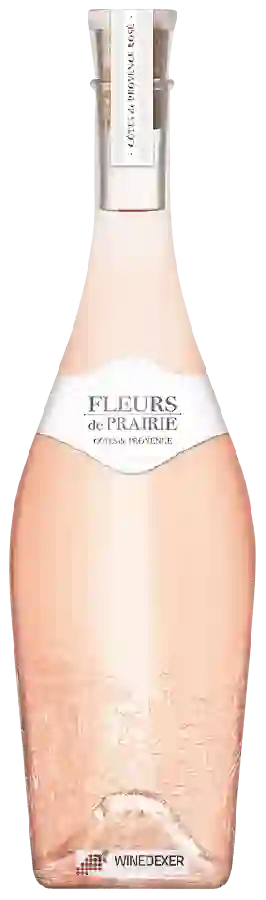
Winery Fleurs de PrairieCôtes de Provence
 Pink wine


In the mouth this pink wine is a with a nice freshness.
This wine generally goes well with pork, vegetarian or poultry.
The Côtes de Provence of the Winery Fleurs de Prairie is in the top 50 of wines of Côtes de Provence.

Taste structure of the Côtes de Provence from the Winery Fleurs de Prairie
Light | Bold | |
Dry | Sweet | |
Soft | Acidic |
In the mouth the Côtes de Provence of Winery Fleurs de Prairie in the region of Provence is a with a nice freshness.
Wine flavors and olphactive analysis






On the nose the Côtes de Provence of Winery Fleurs de Prairie in the region of Provence often reveals types of flavors of cream, cherry or grapefruit and sometimes also flavors of oaky, tropical or citrus.
Food and wine pairings with Côtes de Provence
Pairings that work perfectly with Côtes de Provence



Original food and wine pairings with Côtes de Provence

The Côtes de Provence of Winery Fleurs de Prairie matches generally quite well with dishes of pork, shellfish or vegetarian such as recipes of salty crumble with courgettes, goat cheese and bacon, scallops or magic cake cheese quiche.
Details and technical informations about Winery Fleurs de Prairie's Côtes de Provence.
Discover the grape variety: Bicane
Simple, lively dry whites with a pale golden robe, a supple palate with preserved acidity, and undemonstrative aromas of citrus and white flowers. Vigorous and productive, once distilled in Cognac. Now marginal but preserved in Cognaçais varietal collections, a witness to Charentes heritage. French autochthonous variety from the South-West, father of Admirable de Courtiller via a cross with Chasselas.
Last vintages of this wine

The best vintages of Côtes de Provence from Winery Fleurs de Prairie are 2019, 2018, 2017, 2016 and 2010.
Informations about the Winery Fleurs de Prairie
The Winery Fleurs de Prairie is one of of the world's greatest estates. It offers 5 wines for sale in the of Côtes de Provence to come and discover on site or to buy online.

The wine region of Côtes de Provence
World reference for pale, elegant rosé: salmon to onion-skin hue, notes of strawberry, pink grapefruit, white peach and flowers, fresh, dry, mineral palate, taut finish. 90% of output, the Provençal signature. Grenache, Cinsault, Syrah and native Tibouren in the blend. A few fleshy Mediterranean reds (Mourvèdre, Syrah) and saline Vermentino whites.
The wine region of Provence
World capital of dry, refined rosé (~90% of production). Pale rose-petal colour, delicate nose of fresh red fruits (strawberry, raspberry, redcurrant), citrus (pink grapefruit), white flowers and a mineral touch, taut and thirst-quenching palate — the Mediterranean aperitif par excellence. Blends of Grenache, Cinsault, Syrah, Tibouren and Mourvèdre. Fleshy Bandol reds from Mourvèdre (leather, garrigue, age-worthy), straight Cassis whites.
The word of the wine: Black Grenache
Grenache is a black grape variety that originated in Spain and is one of the great quality varieties of southern France. Sometimes vinified on its own, it is most often blended with one or more other Rhone or southern grape varieties with complementary qualities such as Syrah, Mourvèdre, Carignan or Cinsault. Its wines are warm, with aromas of red fruits (cherry) and spices; they oxidize with time. Vinified alone or in very large proportions, Grenache Noir also makes great natural sweet wines in Roussillon (Rivesaltes, Banyuls, Maury) and in the Rhône Valley (Rasteau).


