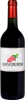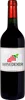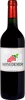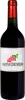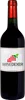
Flat Creek EstateReserve Barbera
 Red wine


This wine generally goes well with pork, poultry or mild and soft cheese.
Wine flavors and olphactive analysis


On the nose the Reserve Barbera of Flat Creek Estate in the region of Texas often reveals types of flavors of oak.
Food and wine pairings with Reserve Barbera
Pairings that work perfectly with Reserve Barbera



Original food and wine pairings with Reserve Barbera

The Reserve Barbera of Flat Creek Estate matches generally quite well with dishes of pork, spicy food or poultry such as recipes of sausages with kale, tripe in the style of caen or aïoli.
Details and technical informations about Flat Creek Estate's Reserve Barbera.
Discover the grape variety: Blütenmuskateller
An interspecific cross, obtained in Russia in 1947, between Severnyj - a relative of Vitis amurensis - and Muscat à petits grains blancs, which is also said to have Muscat fleur d'oranger and Muscat d'Alexandrie. Note that it is resistant to mildew and powdery mildew, and that its wine, often produced as a sweet sparkling wine, is of the muscat type, though less pronounced than that obtained from the usual muscat grape varieties. Unknown in France, it can be found in Germany, Austria, Belgium, the Czech Republic, Bulgaria, Russia, Hungary, Ukraine and Australia.
Last vintages of this wine
The best vintages of Reserve Barbera from Flat Creek Estate are 0
Informations about the Flat Creek Estate
The Flat Creek Estate is one of of the world's great estates. It offers 40 wines for sale in the of Texas to come and discover on site or to buy online.

The wine region of Texas
Texas is the largest state in the United States of America and one of the most productive viticultural states. Covering 696,000 km² (268,000 square miles) between latitudes 25-36°N, this hot, Dry state is home to a range of mesoclimates suitable for viticulture in the deserts, mountains, lakes and plains of Texas. The main Grape varieties grown in Texas are Cabernet Sauvignon, Chardonnay, Chenin Blanc and (despite the hot conditions) Sauvignon Blanc. Generally speaking, Texas viticulture is divided into three main regions: NorthCentral, Southeast and Trans-Pecos.
The word of the wine: Yeast
Micro-organisms at the base of all fermentative processes. A wide variety of yeasts live and thrive naturally in the vineyard, provided that treatments do not destroy them. Unfortunately, their replacement by laboratory-selected yeasts is often the order of the day and contributes to the standardization of the wine. Yeasts are indeed involved in the development of certain aromas.