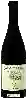
Domaine Ferrer RibièreEmpreinte du Temps Syrahnosaurus Rex
 Red wine



In the mouth this red wine is a powerful with a nice balance between acidity and tannins.
This wine generally goes well with beef, veal or pasta.

Taste structure of the Empreinte du Temps Syrahnosaurus Rex from the Domaine Ferrer Ribière
Light | Bold | |
Smooth | Tannic | |
Dry | Sweet | |
Soft | Acidic |
In the mouth the Empreinte du Temps Syrahnosaurus Rex of Domaine Ferrer Ribière in the region of Languedoc-Roussillon is a powerful with a nice balance between acidity and tannins.
Food and wine pairings with Empreinte du Temps Syrahnosaurus Rex
Pairings that work perfectly with Empreinte du Temps Syrahnosaurus Rex



Original food and wine pairings with Empreinte du Temps Syrahnosaurus Rex
The Empreinte du Temps Syrahnosaurus Rex of Domaine Ferrer Ribière matches generally quite well with dishes of beef, pasta or veal such as recipes of beef in white wine, pasta with mussels or veal tagine with artichokes and lemons.
Details and technical informations about Domaine Ferrer Ribière's Empreinte du Temps Syrahnosaurus Rex.
Discover the grape variety: Black Muscat
Opulent and perfumed sweet and fortified wines with a dark ruby robe, a dense and unctuous palate, showing intense muscat signature aromas (rose, fresh grape), candied red fruits (cherry, strawberry), honey and gentle spices. Also an aromatic table grape. Grown in Australia (Rutherglen), California, South Africa and the Mediterranean for sweet fortified wines. Aromatic black grape obtained in 1837 in England, Muscat of Alexandria × Schiava Grossa, also known as Muscat of Hamburg.
Informations about the Domaine Ferrer Ribière
The Domaine Ferrer Ribière is one of of the world's great estates. It offers 23 wines for sale in the of Languedoc-Roussillon to come and discover on site or to buy online.

The wine region of Languedoc-Roussillon
Largest single French vineyard, dominated by sunny, generous reds. Spicy Syrah, candied Grenache (ripe fruit, garrigue), structured Carignan, deep Mourvèdre, supple Cinsault. Stars: structured Corbières, Minervois, Faugères, Saint-Chinian; round Côtes-du-Roussillon. Legendary vins doux naturels: Banyuls and Maury (fortified Grenache) with notes of cocoa, fig, prune.
The word of the wine: Trimmer
Elevated tractor that allows you to pass through the vineyards by straddling them.