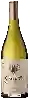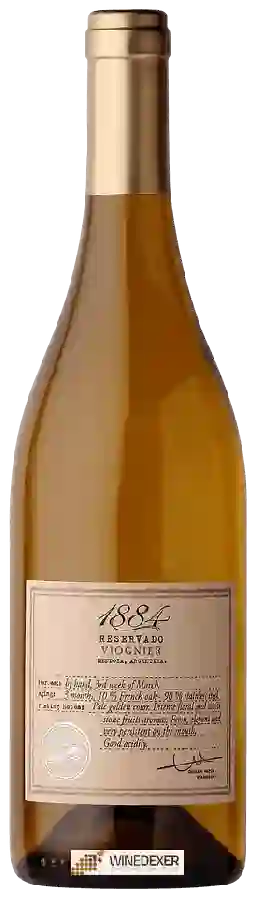
Winery Escorihuela Gascón1884 Reservado Viognier
 White wine



In the mouth this white wine is a powerful.
This wine generally goes well with pork, poultry or rich fish (salmon, tuna etc).

Taste structure of the 1884 Reservado Viognier from the Winery Escorihuela Gascón
Light | Bold | |
Dry | Sweet | |
Soft | Acidic |
In the mouth the 1884 Reservado Viognier of Winery Escorihuela Gascón in the region of Mendoza is a powerful.
Wine flavors and olphactive analysis






On the nose the 1884 Reservado Viognier of Winery Escorihuela Gascón in the region of Mendoza often reveals types of flavors of non oak, earth or microbio and sometimes also flavors of vegetal, oak or tree fruit.
Food and wine pairings with 1884 Reservado Viognier
Pairings that work perfectly with 1884 Reservado Viognier



Original food and wine pairings with 1884 Reservado Viognier

The 1884 Reservado Viognier of Winery Escorihuela Gascón matches generally quite well with dishes of pork, rich fish (salmon, tuna etc) or spicy food such as recipes of soft and inexpensive pasta gratin, round zucchini stuffed with tuna or pork chops with curry and honey.
Details and technical informations about Winery Escorihuela Gascón's 1884 Reservado Viognier.
Discover the grape variety: Viognier
Opulent, heady whites, rich and silky, with intense aromas of apricot, yellow peach, mango, violet, honeysuckle and musky, honeyed notes. Discreet acidity, creamy finish. Star of Condrieu AOC and Château-Grillet AOC, co-vinified in Côte-Rôtie with Syrah (up to 20%). Widely exported to California (Central Coast), Australia (Eden Valley) and Languedoc. A Rhône variety.
Last vintages of this wine
The best vintages of 1884 Reservado Viognier from Winery Escorihuela Gascón are 2010, 2011, 2012, 2015 and 2014.
Informations about the Winery Escorihuela Gascón
The Winery Escorihuela Gascón is one of of the world's great estates. It offers 103 wines for sale in the of Mendoza to come and discover on site or to buy online.

The wine region of Mendoza
World capital of Malbec: powerful, deep reds with blackberry, plum, violet and sweet spice, round tannins and vivid fruit. Also firm Cabernet Sauvignon, supple, juicy Bonarda, aromatic floral white Torrontés. High-altitude vineyards (800-1,700 m) at the foot of the Andes, dry continental climate irrigated by glacial waters. ~80% of Argentine output across 150,000 ha.
The word of the wine: Bâtonnage
A very old technique that has come back into fashion in modern oenology, which consists of shaking the white wine in the barrels at the end of fermentation, or after fermentation, with a stick or a flail, in order to suspend the fine lees composed of yeasts at the end of their activity. This process is sometimes used for red wines.