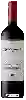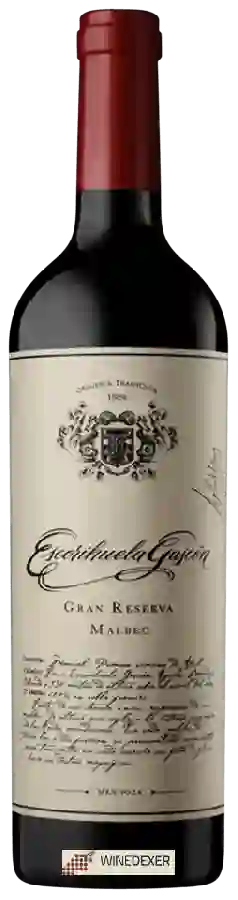
Winery Escorihuela GascónGran Reserva Malbec
 Red wine


In the mouth this red wine is a powerful.
This wine generally goes well with poultry, beef or lamb.
Taste structure of the Gran Reserva Malbec from the Winery Escorihuela Gascón
Light | Bold | |
Smooth | Tannic | |
Dry | Sweet | |
Soft | Acidic |
In the mouth the Gran Reserva Malbec of Winery Escorihuela Gascón in the region of Mendoza is a powerful.
Wine flavors and olphactive analysis






On the nose the Gran Reserva Malbec of Winery Escorihuela Gascón in the region of Mendoza often reveals types of flavors of cherry, oaky or smoke and sometimes also flavors of blackberry, tobacco or vanilla.
Food and wine pairings with Gran Reserva Malbec
Pairings that work perfectly with Gran Reserva Malbec



Original food and wine pairings with Gran Reserva Malbec
The Gran Reserva Malbec of Winery Escorihuela Gascón matches generally quite well with dishes of beef, lamb or poultry such as recipes of family potluck, lamb curry with coconut milk or bresse chicken with yellow wine and morels.
Details and technical informations about Winery Escorihuela Gascón's Gran Reserva Malbec.
Discover the grape variety: Malbec
Malbec, a high-yielding red grape variety, produces tannic and colourful wines. It is produced in different wine-growing regions and changes its name according to the grape variety. Called Auxerrois in Cahors, Malbec in Bordeaux, it is also known as Côt. 6,000 hectares of the Malbec grape are grown in France (in decline since the 1950s). Malbec is also very successful in Argentina. The country has become the world's leading producer of Malbec and offers wines with great potential.
Last vintages of this wine

The best vintages of Gran Reserva Malbec from Winery Escorihuela Gascón are 2019, 2018, 2016, 2017 and 2015.
Informations about the Winery Escorihuela Gascón
The Winery Escorihuela Gascón is one of of the world's great estates. It offers 103 wines for sale in the of Mendoza to come and discover on site or to buy online.

The wine region of Mendoza
World capital of Malbec: powerful, deep reds with blackberry, plum, violet and sweet spice, round tannins and vivid fruit. Also firm Cabernet Sauvignon, supple, juicy Bonarda, aromatic floral white Torrontés. High-altitude vineyards (800-1,700 m) at the foot of the Andes, dry continental climate irrigated by glacial waters. ~80% of Argentine output across 150,000 ha.
The word of the wine: Late harvest
A name historically used in Alsace, late harvest refers to grapes harvested during over-ripening for the production of sweet and syrupy wines.