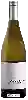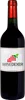
Bodegas EngueraCastillo del Baron Gran Reserva
 Red wine


In the mouth this red wine is a powerful.
This wine generally goes well with poultry, beef or veal.
Taste structure of the Castillo del Baron Gran Reserva from the Bodegas Enguera
Light | Bold | |
Smooth | Tannic | |
Dry | Sweet | |
Soft | Acidic |
In the mouth the Castillo del Baron Gran Reserva of Bodegas Enguera in the region of Valence is a powerful.
Food and wine pairings with Castillo del Baron Gran Reserva
Pairings that work perfectly with Castillo del Baron Gran Reserva



Original food and wine pairings with Castillo del Baron Gran Reserva

The Castillo del Baron Gran Reserva of Bodegas Enguera matches generally quite well with dishes of beef, pasta or veal such as recipes of stuffed zucchini, pasta with tuna and tomato or veal tagine with potatoes and olives.
Details and technical informations about Bodegas Enguera's Castillo del Baron Gran Reserva.
Discover the grape variety: Tempranillo
The black Tempranillo is a grape variety native to Spain. It produces a variety of grape specially used for the elaboration of wine. It is rare to find this grape to eat on our tables. This variety of grape is characterized by medium-sized bunches and medium-sized grapes. The black Tempranillo can be found in several vineyards: South-West, Languedoc & Roussillon, Cognac, Bordeaux, Rhone valley, Provence & Corsica, Loire valley, Savoie & Bugey, Beaujolais.
Last vintages of this wine
The best vintages of Castillo del Baron Gran Reserva from Bodegas Enguera are 1998, 0, 1999
Informations about the Bodegas Enguera
The Bodegas Enguera is one of of the world's great estates. It offers 40 wines for sale in the of Valence to come and discover on site or to buy online.

The wine region of Valence
Valencia is a province in the centre of Spain's sunny east coast, perhaps better known for its oranges (and paella) than its wine. The administrative Center of Valencia is the city of the same name, the third largest in Spain and the largest port on the Mediterranean. Archaeological evidence suggests that wine making in Valencia dates back more than a thousand years, but the region has never been particularly prominent on the world wine map. In modern times, Valencia's wine production has focused on quantity rather than quality, although this is gradually changing.
The word of the wine: Performance
Quantity of grapes harvested per hectare. In AOC, the average yield is limited on the proposal of the appellation syndicate, validated by the Inao. The use of high-performance plant material (especially clones) and better control of vine diseases have increased yields. This is not without consequences on the quality of the wines (dilution) and on the state of the market (too much wine). We must not over-simplify: low yields are not synonymous with quality, and it is often in years with generous harvests that we find the greatest vintages (1982 and 1986 in Bordeaux, 1996 in Champagne, 1990 and 2005 in Burgundy...).