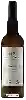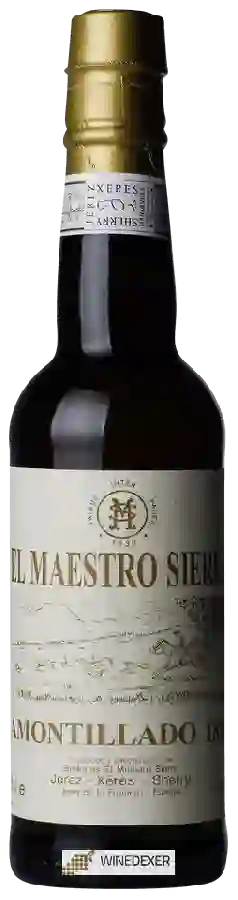
Winery El Maestro SierraAmontillado 1830
 Natural sweet wine


In the mouth this natural sweet wine is a powerful with a good balance between acidity and sweetness.
This wine generally goes well with appetizers and snacks, mature and hard cheese or cured meat.
Taste structure of the Amontillado 1830 from the Winery El Maestro Sierra
Light | Bold | |
Dry | Sweet | |
Soft | Acidic |
In the mouth the Amontillado 1830 of Winery El Maestro Sierra in the region of Andalousie is a powerful with a good balance between acidity and sweetness.
Wine flavors and olphactive analysis





On the nose the Amontillado 1830 of Winery El Maestro Sierra in the region of Andalousie often reveals types of flavors of non oak, earth or oak and sometimes also flavors of spices.
Food and wine pairings with Amontillado 1830
Pairings that work perfectly with Amontillado 1830



Original food and wine pairings with Amontillado 1830


The Amontillado 1830 of Winery El Maestro Sierra matches generally quite well with dishes of sweet desserts, mature and hard cheese or appetizers and snacks such as recipes of express cherry clafoutis, jack be little (mini pumpkin) egg casserole or assortments of mini savoury tarts.
Details and technical informations about Winery El Maestro Sierra's Amontillado 1830.
Discover the grape variety: Ancellotta
A very old grape variety that has been cultivated for a long time in the northern and central parts of Italy. It can also be found in Switzerland, Spain, Eastern Europe, Brazil, Argentina, ... little known in France.
Last vintages of this wine

The best vintages of Amontillado 1830 from Winery El Maestro Sierra are 0, 2008
Informations about the Winery El Maestro Sierra
The Winery El Maestro Sierra is one of of the world's greatest estates. It offers 12 wines for sale in the of Jerez-Xérès-Sherry to come and discover on site or to buy online.

The wine region of Jerez-Xérès-Sherry
The wine region of Jerez-Xérès-Sherry is located in the region of Andalousie of Spain. Wineries and vineyards like the Domaine Bodegas Ximénez-Spínola or the Domaine Valdespino produce mainly wines natural sweet, sweet and white. The most planted grape varieties in the region of Jerez-Xérès-Sherry are Tempranillo, Bobal and Tinta Barroca, they are then used in wines in blends or as a single variety. On the nose of Jerez-Xérès-Sherry often reveals types of flavors of non oak, apricot or orange peel and sometimes also flavors of banana, golden raisin or orange.
The wine region of Andalousie
Andalusia, located in the southwest of Spain, is the southernmost administrative region of the Spanish mainland. It is home to the world-famous fortified wine, sherry. This dynamic region is the most populous in Spain and has a colourful history. Its strategic position at the gateway to the Mediterranean and its proximity to Africa have made it the target of many settlements and invasions throughout history.
The word of the wine: Pulp
Fleshy and juicy part of the grape berry, it contains sugars, organic acids and various nitrogenous and mineral compounds.