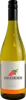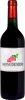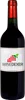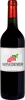
Winery Dona HelenaReserva
 Red wine



In the mouth this red wine is a powerful with a nice balance between acidity and tannins.
This wine generally goes well with poultry, beef or veal.
Taste structure of the Reserva from the Winery Dona Helena
Light | Bold | |
Smooth | Tannic | |
Dry | Sweet | |
Soft | Acidic |
In the mouth the Reserva of Winery Dona Helena in the region of Península de Setúbal is a powerful with a nice balance between acidity and tannins.
Food and wine pairings with Reserva
Pairings that work perfectly with Reserva



Original food and wine pairings with Reserva

The Reserva of Winery Dona Helena matches generally quite well with dishes of beef, pasta or veal such as recipes of beef luc lake, pasta with scamorza and pancetta cheese or veal simmered with vegetables.
Details and technical informations about Winery Dona Helena's Reserva.
Discover the grape variety: Noah
American, resulting from a natural cross between taylor (Vitis Labrusca x Vitis Riparia) and Vitis Riparia, the seeds of the taylor then sown in 1869 by Otto Wasserzicher in Nauvoo, Illinois. Noah has been used extensively as a progenitor by hybridizers such as Baco, Bertille-Seyve, Castel, Gaillard and Seibel, the best known being baco blanc or baco 22A (folle blanche x Noah). In France, it is one of the six hybrids prohibited since 1935 (included in European regulations): clinton, herbemont, isabelle, jacquez, Noah and othello. Today, it has practically disappeared and can sometimes be found in private homes established in vineyards.
Last vintages of this wine
The best vintages of Reserva from Winery Dona Helena are 2008, 0, 2014, 2013
Informations about the Winery Dona Helena
The Winery Dona Helena is one of of the world's greatest estates. It offers 9 wines for sale in the of Península de Setúbal to come and discover on site or to buy online.

The wine region of Península de Setúbal
Setúbal Peninsula (also known as Península de Setúbal) is the Portuguese wine region immediately southeast of Lisbon, across the Tejo estuary. The Terroir in the area ranges from sandy coastal plains to the craggy, limestone-rich Serra Arribida hills. The area is known for its Dry red wines made from Castelão, and for its fortified wines and Sweet Moscatel de Setúbal. The wines produced here are made under three titles: two DOCs, Palmela and Setúbal, and one IGP.
The word of the wine: Marcottage
A vine reproduction technique that consists of burying a vine shoot that takes root and reproduces a plant with the same characteristics as the vine to which it is attached (synonym: provignage).