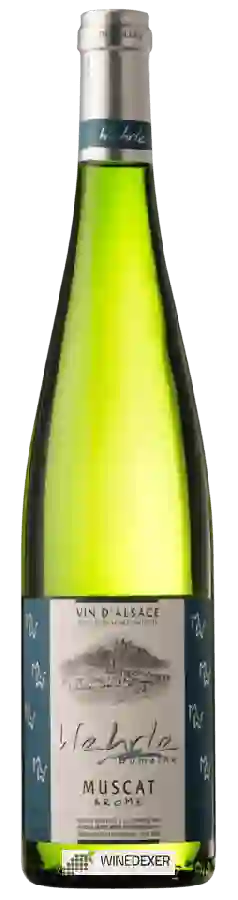
Domaine WehrleAróme Muscat
 White wine


This wine generally goes well with spicy food and sweet desserts.

Food and wine pairings with Aróme Muscat
Pairings that work perfectly with Aróme Muscat


Original food and wine pairings with Aróme Muscat
The Aróme Muscat of Domaine Wehrle matches generally quite well with dishes of spicy food or sweet desserts such as recipes of lamb shoulder confit or french toast.
Details and technical informations about Domaine Wehrle's Aróme Muscat.
Discover the grape variety: Riminèse
Simple, fresh dry whites with a pale golden colour, a supple palate with moderate acidity, and understated aromas of citrus and white flowers. Discreet rustic profile. Preserved in a few ampelographic collections for its heritage value, it belongs to the group of ancient varieties that have virtually disappeared from commercial production. A rare white grape variety, poorly documented, grown in negligible quantities.
Informations about the Domaine Wehrle
The Domaine Wehrle is one of of the world's greatest estates. It offers 33 wines for sale in the of Alsace to come and discover on site or to buy online.

The wine region of Alsace
Capital of great French aromatic whites, most often dry and single-varietal. Straight, mineral Riesling (lemon, gunflint), opulent, exuberant Gewurztraminer (lychee, rose, spices), round, smoky Pinot Gris, floral, crisp Muscat, supple Pinot Blanc. Fine, fruity Crémants d'Alsace, exceptional sweet Vendanges Tardives and Sélection de Grains Nobles. 15,500 ha at the foot of the Vosges on varied soils, 51 Grands Crus since 1975.
The word of the wine: Passerillage
Concentration of the grape by drying out, under the influence of wind or sun, as opposed to botrytisation, which is the concentration obtained by the development of the "noble rot" for which Botrytis cinerea is responsible. The word is mainly used for sweet wines.