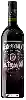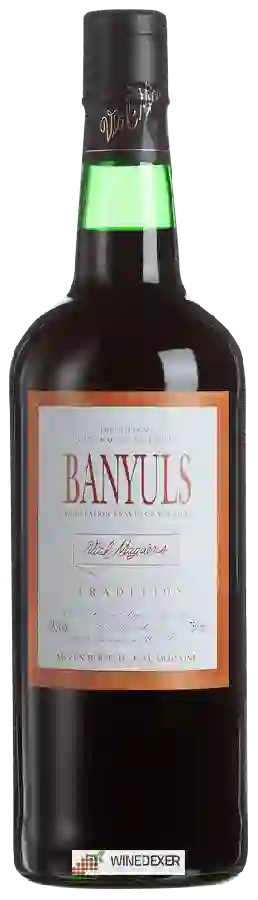
Domaine Vial MagnèresBanyuls Tradition
 Natural sweet wine



This wine generally goes well with beef and mature and hard cheese.

Wine flavors and olphactive analysis


On the nose the Banyuls Tradition of Domaine Vial Magnères in the region of Languedoc-Roussillon often reveals types of flavors of chocolate, non oak or oak.
Food and wine pairings with Banyuls Tradition
Pairings that work perfectly with Banyuls Tradition


Original food and wine pairings with Banyuls Tradition
The Banyuls Tradition of Domaine Vial Magnères matches generally quite well with dishes of beef or mature and hard cheese such as recipes of couscous without couscous maker or croque monsieur with chopped steak.
Details and technical informations about Domaine Vial Magnères's Banyuls Tradition.
Discover the grape variety: Lagrein
Full-bodied, deeply coloured reds with a dark, deep ruby robe, firm tannins and a dense palate, showing signature aromas of black fruits (blackberry, cassis), plum, cocoa, spice and earthy notes. Also vinified as a delicate rosé ("Lagrein Kretzer"). The star of Alto Adige Lagrein DOC, the signature of great Alpine Italian reds with a strong identity. An indigenous Italian variety from South Tyrol (Südtirol/Alto Adige), grown around Bolzano.
Last vintages of this wine
The best vintages of Banyuls Tradition from Domaine Vial Magnères are 2017, 2008, 2016
Informations about the Domaine Vial Magnères
The Domaine Vial Magnères is one of of the world's greatest estates. It offers 18 wines for sale in the of Banyuls to come and discover on site or to buy online.

The wine region of Banyuls
AOC natural sweet wine of the Catalan Côte Vermeille, spectacular schist terrace vineyards facing the Mediterranean. Black Grenache fortified with alcohol (min. 50%, min. 75% in Grand Cru).
The wine region of Languedoc-Roussillon
Largest single French vineyard, dominated by sunny, generous reds. Spicy Syrah, candied Grenache (ripe fruit, garrigue), structured Carignan, deep Mourvèdre, supple Cinsault. Stars: structured Corbières, Minervois, Faugères, Saint-Chinian; round Côtes-du-Roussillon. Legendary vins doux naturels: Banyuls and Maury (fortified Grenache) with notes of cocoa, fig, prune.
The word of the wine: Mistelle
Unfermented must with added brandy, also called liqueur wine: Pineau des Charentes, Floc de Gascogne, Macvin du Jura, Ratafia, Cartagène du Languedoc.