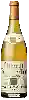
Domaine Chant des LoupsMuscat de Beaumes de Venise
 Natural sweet wine
This wine generally goes well with spicy food and sweet desserts.
Food and wine pairings with Muscat de Beaumes de Venise
Pairings that work perfectly with Muscat de Beaumes de Venise


Original food and wine pairings with Muscat de Beaumes de Venise
The Muscat de Beaumes de Venise of Domaine Chant des Loups matches generally quite well with dishes of spicy food or sweet desserts such as recipes of samoussa 3 reunionese cheeses or chocolate mousse.
Details and technical informations about Domaine Chant des Loups's Muscat de Beaumes de Venise.
Discover the grape variety: Blanc Cardon
An ancient grape variety from the Garonne valley, long confused with the white mauzac. Today, it is practically no longer present in the vineyard and is therefore on the verge of extinction.
Informations about the Domaine Chant des Loups
The Domaine Chant des Loups is one of of the world's greatest estates. It offers 7 wines for sale in the of Muscat de Beaumes de Venise to come and discover on site or to buy online.

The wine region of Muscat de Beaumes de Venise
The wine region of Muscat de Beaumes de Venise is located in the region of Beaumes-de-Venise of Rhone Valley of France. Wineries and vineyards like the Domaine Bernardins or the Domaine Alain Ignace produce mainly wines natural sweet, white and sweet. The most planted grape varieties in the region of Muscat de Beaumes de Venise are Chardonnay, Mourvèdre and Marsanne, they are then used in wines in blends or as a single variety. On the nose of Muscat de Beaumes de Venise often reveals types of flavors of pineapple, cheese or apples and sometimes also flavors of white peach, raisin or mint.
The wine region of Rhone Valley
The Rhone Valley is a key wine-producing region in Southeastern France. It follows the North-south course of the Rhône for nearly 240 km, from Lyon to the Rhône delta (Bouches-du-Rhône), near the Mediterranean coast. The Length of the valley means that Rhône wines are the product of a wide variety of soil types and mesoclimates. The viticultural areas of the region cover such a distance that there is a widely accepted division between its northern and southern parts.
The word of the wine: VDN
Natural sweet wine. Wine obtained by mutage of the must during fermentation by adding over-finished alcohol at 96 °, produced in the vineyards of Roussillon, Languedoc, Rhone Valley and Corsica.