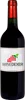
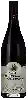
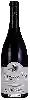
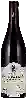
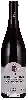
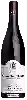
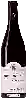
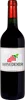
The Domaine Bruno Clavelier of Côte de Beaune of Burgundy
Domaine Bruno Clavelier
The winery offers 23 different wines
4.1
Note - 1Note - 1Note - 1Note - 1Note - 0
Its wines get an average rating of 4.1.
It is ranked in the top 395 of the estates of Burgundy.
It is located in Côte de Beaune in the region of Burgundy

The Domaine Bruno Clavelier is one of the best wineries to follow in Côte de Beaune.. It offers 23 wines for sale in of Côte de Beaune to come and discover on site or to buy online.

The Bruno Clavelier Estate is located in the valley of the Côte de Beaune, in Burgundy, France. They produce wines of the finest quality. The estate produces white wines from the village appellations of Puligny-Montrachet and Meursault, as well as reds from the village appellations of Volnay, Pommard, and Savigny-Lès-Beaune. These wines testify to the history of the vineyard and the terroir of Burgundy. The Clavelier family settled in this part of the Côte de Beaune in 1924. For over four generations, the family has devoted themselves to the art and work of the vine. The estate now spans over 4 hectares of vineyards located on the best slopes of the commune of Corton, for an annual production of about 9000 bottles. Tradition and innovation are the watchwords of Bruno Clavelier's wines. The production techniques are the result of accumulated experience over generations. The oldest vine plants are over 80 years old and represent a significantly valuable source of viticultural memory. The younger ones, planted in the 2000s, are selected for their ability to produce more aromatic and modern wines. The vine work, pressing and oak barrel ageing are based on well-established principles and practices that promote the production of unparalleled quality wines. The wines offered by Bruno Clavelier bear the hallmark of an historic domain that's an integral part of the great history of the vine and wine. Great precision in the management of the plots and rigour and balance in the work at each stage of the winemaking process. The wines from this estate are rich and complex, with subtle nuances of fruit, mineral and woody notes that make each tasting exceptional.
Top Domaine Bruno Clavelier wines

Looking for the best Domaine Bruno Clavelier wines in Côte de Beaune among all the wines in the region? Check out our tops of the best red, white or effervescent Domaine Bruno Clavelier wines. Also find some food and wine pairings that may be suitable with the wines from this area. Learn more about the region and the Domaine Bruno Clavelier wines with technical and enological descriptions.

The top red wines of Domaine Bruno Clavelier

Food and wine pairings with a red wine of Domaine Bruno Clavelier

How Domaine Bruno Clavelier wines pair with each other generally quite well with dishes of beef, veal or poultry such as recipes of venison stew to be prepared the day before, duck with orange or chicken ballotine with ham and mushrooms.

Organoleptic analysis of red wines of Domaine Bruno Clavelier

On the nose the red wine of Domaine Bruno Clavelier. often reveals types of flavors of cherry, cranberry or earth and sometimes also flavors of spices, red fruit or black fruit. In the mouth the red wine of Domaine Bruno Clavelier. is a with a nice freshness.

The best vintages in the red wines of Domaine Bruno Clavelier

  • 2005With an average score of 4.30/5
  • 2016With an average score of 4.22/5
  • 2015With an average score of 4.17/5
  • 2012With an average score of 4.16/5
  • 2017With an average score of 4.16/5
  • 2002With an average score of 4.15/5

The grape varieties most used in the red wines of Domaine Bruno Clavelier.

  • Pinot Noir
  • Gamay

Discovering the wine region of Côte de Beaune

The Côte de Burgundy/cote-de-beaune/beaune">Beaune is a key wine region in Burgundy, eastern France. It owes its name to its main town, Beaune - the epicentre of local wine production and trade. Renowned for producing some of the world's most expensive white wines (most of which bear the name Montrachet in one form or another), the region also produces a handful of Burgundy's finest red wines, including those from the premier crus Pommard and grand cru Corton. As with most Burgundy wines, the white wines are made from Hardonnay">Chardonnay, the reds from Pinot Noir.

The Côte de Beaune is a narrow strip of land less than 5 kilometers wide, extending 25 kilometers to the northeast. The main Vineyard of the Côte de Beaune is almost exactly the same Size and shape as its northern counterpart, the Côte de Nuits. Together, these two regions form the Côte d'Or, a region named after the Côte d'Or and characterized by the Côte d'Or limestone escarpment that forms its backbone. The importance of this escarpment to Côte de Beaune viticulture is hard to underestimate; not only does it protect the vineyards from the prevailing westerly winds, but it also provides gently sloping, free-draining vineyard sites with near-perfect South and southeast aspects.

The top sparkling wines of Domaine Bruno Clavelier

Food and wine pairings with a sparkling wine of Domaine Bruno Clavelier

How Domaine Bruno Clavelier wines pair with each other generally quite well with dishes of shellfish, poultry or appetizers and snacks such as recipes of shrimp with curry express, lemon chicken or bacon-gruyere-tomato cake.

The grape varieties most used in the sparkling wines of Domaine Bruno Clavelier.

  • Chardonnay
  • Pinot Noir
  • Pinot Blanc
  • Aligoté

Discover the grape variety: Pinot noir

Pinot noir is an important red grape variety in Burgundy and Champagne, and its reputation is well known! Great wines such as the Domaine de la Romanée Conti elaborate their wines from this famous grape variety, and make it a great variety. When properly vinified, pinot noit produces red wines of great finesse, with a wide range of aromas depending on its advancement (fruit, undergrowth, leather). it is also the only red grape variety authorized in Alsace. Pinot Noir is not easily cultivated beyond our borders, although it has enjoyed some success in Oregon, the United States, Australia and New Zealand.

The top white wines of Domaine Bruno Clavelier

Food and wine pairings with a white wine of Domaine Bruno Clavelier

How Domaine Bruno Clavelier wines pair with each other generally quite well with dishes of pasta, rich fish (salmon, tuna etc) or shellfish such as recipes of pasta à la forestière (chanterelles), english tuna croque-monsieur or fish pot.

Organoleptic analysis of white wines of Domaine Bruno Clavelier

On the nose the white wine of Domaine Bruno Clavelier. often reveals types of flavors of citrus, apples or butter and sometimes also flavors of green apple, minerality or lemon. In the mouth the white wine of Domaine Bruno Clavelier. is a powerful with a nice freshness.

The best vintages in the white wines of Domaine Bruno Clavelier

  • 2018With an average score of 3.80/5
  • 0With an average score of 3.70/5
  • 2015With an average score of 3.60/5
  • 2014With an average score of 3.50/5

The grape varieties most used in the white wines of Domaine Bruno Clavelier.

  • Chardonnay
  • Aligoté

The word of the wine: Alcohol content

Quantity of alcohol in wine and in all alcoholic beverages, expressed in degrees or as a percentage.

Discover other wineries and winemakers neighboring the Domaine Bruno Clavelier

Planning a wine route in the of Côte de Beaune? Here are the wineries to visit and the winemakers to meet during your trip in search of wines similar to Domaine Bruno Clavelier.

Discover the grape variety: Aligoté

Aligoté is an ancient Burgundian grape variety (it has different names depending on the region in which it is grown: griset blanc in Beaune, giboudot blanc in the Chalonnais or troyen blanc in the Aube), mainly used in the production of Bourgogne-Aligoté, Bouzeron and Crémant-de-Bourgogne.aligoté is a medium-fine white grape variety, quite productive, which gives clear, acidic, fresh and light white wines. An anecdote often says that it was a member of the clergy named Kir who gave it its letters of nobility by adding it to blackcurrant cream to prepare an aperitif.produced on more than 1,600 hectares in Burgundy, aligoté has also been exported. It is also cultivated in Eastern Europe (Ukraine, Romania), California, Canada and Chile, representing more than 20,000 hectares in the world.