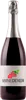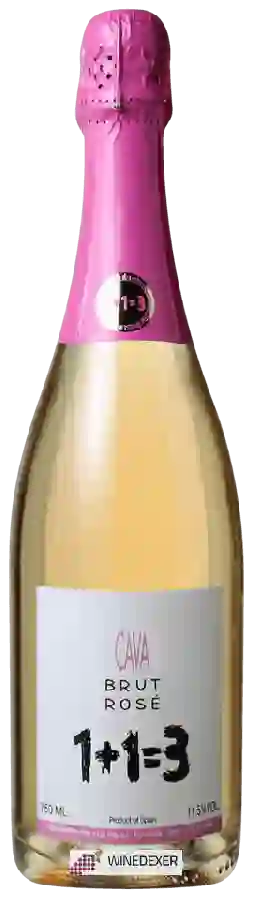
Winery 1+1=3 (U Mes Fan Tres)Cava Brut Rosé
 Sparkling wine



In the mouth this sparkling wine is a powerful with a nice vivacity and a fine and pleasant bubble.
This wine generally goes well with appetizers and snacks, lean fish or shellfish.
Taste structure of the Cava Brut Rosé from the Winery 1+1=3 (U Mes Fan Tres)
Light | Bold | |
Soft | Acidic | |
Gentle | Fizzy |
In the mouth the Cava Brut Rosé of Winery 1+1=3 (U Mes Fan Tres) in the region of Cava is a powerful with a nice vivacity and a fine and pleasant bubble.
Wine flavors and olphactive analysis


On the nose the Cava Brut Rosé of Winery 1+1=3 (U Mes Fan Tres) in the region of Cava often reveals types of flavors of earth.
Food and wine pairings with Cava Brut Rosé
Pairings that work perfectly with Cava Brut Rosé



Original food and wine pairings with Cava Brut Rosé


The Cava Brut Rosé of Winery 1+1=3 (U Mes Fan Tres) matches generally quite well with dishes of shellfish, appetizers and snacks or lean fish such as recipes of magic marinade (for shrimps, scallops, fish...), fresh vegetable dips and their sauces for the aperitif or cod tournedos with chorizo.
Details and technical informations about Winery 1+1=3 (U Mes Fan Tres)'s Cava Brut Rosé.
Discover the grape variety: Kalecik karasi
This grape variety is native to Turkey, where it is very well known and highly appreciated. It is virtually unknown in France and even less so in other wine-producing countries. Still in Turkey, we can find a white grape variety called kalecik also known as hasandede beyazi.
Last vintages of this wine
The best vintages of Cava Brut Rosé from Winery 1+1=3 (U Mes Fan Tres) are 0
Informations about the Winery 1+1=3 (U Mes Fan Tres)
The Winery 1+1=3 (U Mes Fan Tres) is one of of the world's great estates. It offers 39 wines for sale in the of Cava to come and discover on site or to buy online.

The wine region of Cava
Cava is Spain's signature style of Sparkling wine, and the Iberian Peninsula's answer to Champagne. The traditional Grape varieties used in Cava were Macabeo, Parellada and Xarel-lo, but the Champagne varieties Chardonnay and Pinot Noir are also used. While the first Cava was produced exclusively in Catalonia - specifically in a small town called San Sadurní de Noya - modern Cava can be sourced from various regions of Spain. Aragon, Navarre, Rioja, Pais Vasco, Valencia and Extremadura have specific delimited areas that can benefit from the designation of origin.
The word of the wine: Vinosity
When tasting a red wine, a pleasant sensation on the palate with a fruity and sappy character in harmony with a caressing and persistent presence of tannins.