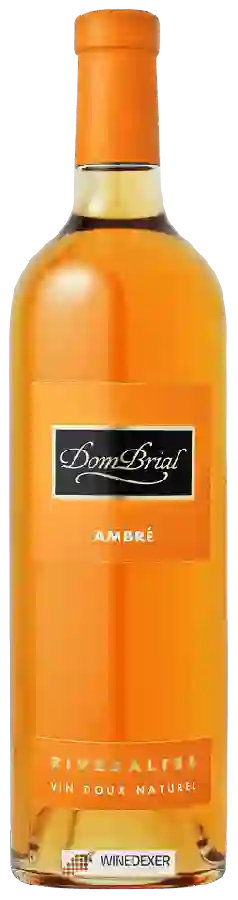
Winery Dom BrialRivesaltes Ambré
 Sweet wine


This wine generally goes well with poultry, rich fish (salmon, tuna etc) or shellfish.

Wine flavors and olphactive analysis



On the nose the Rivesaltes Ambré of Winery Dom Brial in the region of Languedoc-Roussillon often reveals types of flavors of caramel, toffee or fig and sometimes also flavors of non oak, microbio or oak.
Food and wine pairings with Rivesaltes Ambré
Pairings that work perfectly with Rivesaltes Ambré



Original food and wine pairings with Rivesaltes Ambré
The Rivesaltes Ambré of Winery Dom Brial matches generally quite well with dishes of rich fish (salmon, tuna etc), shellfish or poultry such as recipes of endives with smoked salmon au gratin, pageot or chicken fillets with mustard and cream.
Details and technical informations about Winery Dom Brial's Rivesaltes Ambré.
Discover the grape variety: Lival
Deeply coloured, simple fruity reds with a sustained purple colour, soft tannins and an airy palate with moderate acidity, showing aromas of red and black fruits. Productive. Grown in small quantities in southern France for IGP wines, used in southern blends and part of the modern intraspecific hybrids intended for accessible table wine production. French black variety obtained in 1956 by complex crossing.
Last vintages of this wine

The best vintages of Rivesaltes Ambré from Winery Dom Brial are 1993, 2007, 2009, 2008 and 2006.
Informations about the Winery Dom Brial
The Winery Dom Brial is one of of the world's greatest estates. It offers 63 wines for sale in the of Rivesaltes to come and discover on site or to buy online.

The wine region of Rivesaltes
Great Roussillon appellation for Vins Doux Naturels, ~5,200 ha across Pyrénées-Orientales and Aude. Mutage with neutral spirit halts fermentation. 4 signature styles: Grenat on black Grenache with intense notes of candied cherry, kirsch and cocoa; oxidative Tuilé with prune, coffee, walnut and caramel; Ambré (white Grenache) with honey, candied orange, dried fruits; fruity Rosé strawberry. Exceptional ageing (10-50 years).
The wine region of Languedoc-Roussillon
Largest single French vineyard, dominated by sunny, generous reds. Spicy Syrah, candied Grenache (ripe fruit, garrigue), structured Carignan, deep Mourvèdre, supple Cinsault. Stars: structured Corbières, Minervois, Faugères, Saint-Chinian; round Côtes-du-Roussillon. Legendary vins doux naturels: Banyuls and Maury (fortified Grenache) with notes of cocoa, fig, prune.
The word of the wine: Flavor
Sensation (sweet, salty, sour or bitter) produced on the tongue by a food.


