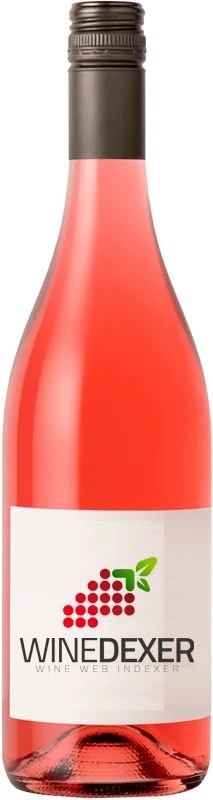
Winery DecanalPink Zinfandel
 Pink wine


This wine generally goes well with beef, lamb or goat cheese.
Food and wine pairings with Pink Zinfandel
Pairings that work perfectly with Pink Zinfandel



Original food and wine pairings with Pink Zinfandel
The Pink Zinfandel of Winery Decanal matches generally quite well with dishes of beef, lamb or goat cheese such as recipes of beef tongue with pickle sauce, saddle of lamb stuffed with chicken breast and basil or potato, coppa and goat cheese gratin.
Details and technical informations about Winery Decanal's Pink Zinfandel.
Discover the grape variety: Zinfandel
From Croatia where it is called crljenak kastelanski or pribidrag. According to genetic analyses carried out by Professor Carole Meredith of California University in Davis (United States), it is related to the Croatian plavac mali and Zinfandel. It is also found in South Africa, New Zealand, Chile, Brazil, Germany, Bulgaria, Albania, Italy under the name of Primitivo, Malta, Greece, Portugal and to some extent in Croatia. In the United States (California), it is one of the most widely planted grape varieties, having been introduced in the 1830s well before Primitivo. In France, it is registered in the official catalogue of vine varieties on the A1 list under the name Primitivo.
Last vintages of this wine
The best vintages of Pink Zinfandel from Winery Decanal are 0
Informations about the Winery Decanal
The Winery Decanal is one of of the world's greatest estates. It offers 12 wines for sale in the of Puglia to come and discover on site or to buy online.

The wine region of Puglia
Puglia (Apulia to many English speakers) is a Long, slender wine region in the extreme Southeast corner of Italy's "boot". To use the shoe analogy often used to illustrate the shape of Italy, Apulia extends from the tip of the heel to the mid-calf, where the spur of the Gargano Peninsula juts out into the Adriatic Sea. The heel (the Salento peninsula) occupies the southern half of the region and is of great importance for the identity of Puglia. Not only are there cultural and geographical differences from Northern Puglia, but the wines are also different.
The word of the wine: Attack
First impressions perceived after the wine is put in the mouth.