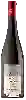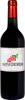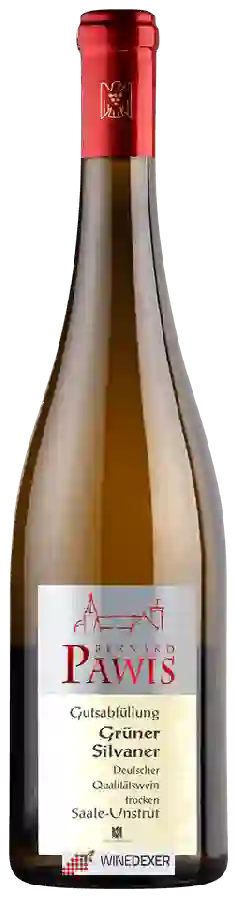
Winery Bernard PawisGrüner - Silvaner Trocken
 White wine



This wine generally goes well with pork, vegetarian or poultry.

Food and wine pairings with Grüner - Silvaner Trocken
Pairings that work perfectly with Grüner - Silvaner Trocken



Original food and wine pairings with Grüner - Silvaner Trocken



The Grüner - Silvaner Trocken of Winery Bernard Pawis matches generally quite well with dishes of pork, rich fish (salmon, tuna etc) or shellfish such as recipes of pork stew with bacon and cream, spaghetti with salmon or scallop mousse.
Details and technical informations about Winery Bernard Pawis's Grüner - Silvaner Trocken.
Discover the grape variety: Moscatel Roxo
Intense, opulent fortified sweet wines with an amber colour and coppery highlights, a dense, unctuous palate, showing powerful muscat aromas (rose, fresh grape), exotic fruits (lychee, mango), candied citrus, honey and balsamic notes. Very long finish. Star of Moscatel de Setúbal Roxo, an emblematic fortified sweet wine of southern Portugal. Portuguese grey variety, an aromatic pink-skinned mutation of Muscat à Petits Grains.
Last vintages of this wine
The best vintages of Grüner - Silvaner Trocken from Winery Bernard Pawis are 0
Informations about the Winery Bernard Pawis
The Winery Bernard Pawis is one of of the world's great estates. It offers 45 wines for sale in the of Saale-Unstrut to come and discover on site or to buy online.

The wine region of Saale-Unstrut
Germany's northernmost region (Saxony-Anhalt), ~650 ha. Nordic whites that are dry, lively and mineral with signature notes of green apple, citrus, white flowers, fresh herbs and a crisp finish — a direct, thirst-quenching style. Dominant Muller-Thurgau (~22%) light and floral, Weissburgunder (Pinot Blanc) round and precise, herbaceous Silvaner and taut Riesling. Early grapes suited to the harsh continental climate.
The word of the wine: Sarment
Vine shoot of the year.