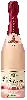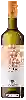
Winery RotkäppchenCuvée Brut
 Sparkling wine


This wine generally goes well with
Wine flavors and olphactive analysis

On the nose the Cuvée Brut of Winery Rotkäppchen in the region of Saale-Unstrut often reveals types of flavors of tree fruit, citrus fruit.
Details and technical informations about Winery Rotkäppchen's Cuvée Brut.
Discover the grape variety: Bronner
An interspecific cross between merzling and rondo obtained in 1975 by Norbert Becker of the Freiburg Research Institute in Germany. It has the particularity of having only one gene for resistance to mildew and powdery mildew. However, the I.N.R.A. Bordeaux Sciences Agro has since noted a loss of efficiency on mildew due to a bypass. It can be found in Denmark, the Netherlands, Germany, Belgium, Italy, England, etc. It is not very widespread today and is almost unknown in France. It should not be confused with another variety of the same name, which comes from a Pinot Blanc seedling, also obtained in Germany by Johann Philipp Bronner.
Last vintages of this wine
The best vintages of Cuvée Brut from Winery Rotkäppchen are 0
Informations about the Winery Rotkäppchen
The Winery Rotkäppchen is one of of the world's great estates. It offers 44 wines for sale in the of Saale-Unstrut to come and discover on site or to buy online.

The wine region of Saale-Unstrut
Saale-Unstrut is the northernmost of Germany's 13 wine-growing regions. At 51 degrees northern latitude, it is one of the most northerly wine regions in the world. It takes its name from the two rivers on the banks of which the Vines of the region grow, and is composed of three non-contiguous Parts located mainly in the federal state of Saxony-Anhalt, with around 650 hectares (1600 acres) of Vineyards, often terraced, on South and south-west-facing slopes along the narrow river valleys. A smaller area of 20 hectares (50 acres) is located in the state of Thüringen and a block of just 7 hectares (17 acres) in Brandenburg.
The word of the wine: Sulphating
Treatment, formerly practiced with copper sulfate, applied to the vine to prevent cryptogamic diseases.