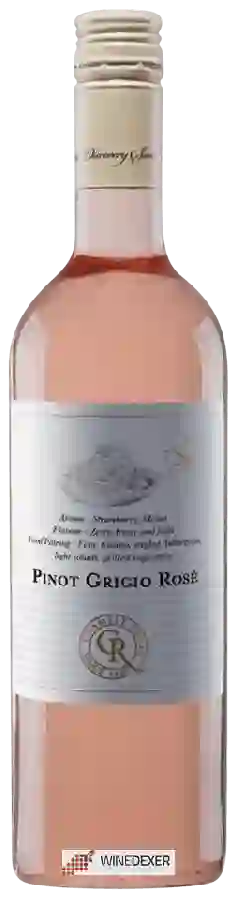
Winery Cramele RecaşPinot Grigio Rosé
 Pink wine


This wine generally goes well with poultry, veal or shellfish.
The Pinot Grigio Rosé of the Winery Cramele Recaş is in the top 90 of wines of Recas.
Food and wine pairings with Pinot Grigio Rosé
Pairings that work perfectly with Pinot Grigio Rosé



Original food and wine pairings with Pinot Grigio Rosé
The Pinot Grigio Rosé of Winery Cramele Recaş matches generally quite well with dishes of veal, shellfish or poultry such as recipes of bites of cheese, shrimp risotto with curry or hawaiian pizza.
Details and technical informations about Winery Cramele Recaş's Pinot Grigio Rosé.
Discover the grape variety: Ekigaïna
Deeply coloured and structured reds with a deep ruby robe, firm to powerful tannins and a dense palate, with signature aromas of black fruits (blackberry, blackcurrant), plum, spices and balsamic notes. Fine ageing potential as a tannic red. Grown mainly in the South-West for IGPs, it offers excellent potential for red wines with ageing ability. French black grape obtained in 1956 by crossing Tannat × Cabernet Sauvignon, like Arinarnoa.
Last vintages of this wine
The best vintages of Pinot Grigio Rosé from Winery Cramele Recaş are 0
Informations about the Winery Cramele Recaş
The Winery Cramele Recaş is one of of the world's great estates. It offers 89 wines for sale in the of Recas to come and discover on site or to buy online.

The wine region of Recas
Banat, western Romania (Timiș), historic vineyard since 1447, temperate continental climate, alluvial and clay-limestone soils. Fetească Neagră is the signature red king (indigenous): deep and spicy with black cherry, plum, blackberry, blackcurrant, leather, tobacco and pepper, firm tannins and dense palate. Finer Negru de Drăgășani, firm Cabernet, supple Merlot, airy Pinot Noir, peppery Syrah. Floral Fetească Albă, tense Fetească Regală.
The word of the wine: Reassembly
During the vinification process, a "cap" is formed at the top of the vats with the solid parts (skin, pulp, pips, etc.), which contain tannins and colouring elements. Pumping over consists of emptying the vat from the bottom and pouring the juice back to the top, in order to mix the cap and the juice and to favour the exchange and the extraction. This old technique allows a better exchange between the solid parts and the liquid.