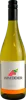
Bodegas CopabocaSauvignon Blanc
 White wine
In the mouth this white wine is a with a nice freshness.
This wine generally goes well with vegetarian, shellfish or goat cheese.
Taste structure of the Sauvignon Blanc from the Bodegas Copaboca
Light | Bold | |
Dry | Sweet | |
Soft | Acidic |
In the mouth the Sauvignon Blanc of Bodegas Copaboca in the region of Castille-et-Léon is a with a nice freshness.
Food and wine pairings with Sauvignon Blanc
Pairings that work perfectly with Sauvignon Blanc



Original food and wine pairings with Sauvignon Blanc
The Sauvignon Blanc of Bodegas Copaboca matches generally quite well with dishes of shellfish, vegetarian or goat cheese such as recipes of clams in white wine, light tuna-tomato quiche (without cream) or pizza with bacon, goat cheese and honey.
Details and technical informations about Bodegas Copaboca's Sauvignon Blanc.
Discover the grape variety: Raffiat de Moncade
Raffiat de Moncade is a white Pyrenean grape variety. A descendant of the white gouais, it should not be confused with the arruffiac. This grape variety has truncated cone-shaped bunches of grapes, which are stalked and winged. The raffiat de Moncade was used by the ampelographer Marcel Durquety to obtain new varieties such as perdea, arroba and arriloba. Still called rousselet, the raffiat de Moncade is associated with an early budding in the year and a late maturity of the second period. It has a semi-spreading habit. This variety is quite productive and resists grey rot and powdery mildew quite well. Raffiat de Moncade is used in the vinification of certain wines from Tursan and Béarn. It is used to produce a neutral, fine, high alcohol and warm wine. It is often combined with petit manseng and gros manseng, which give the wines a high acidity.
Informations about the Bodegas Copaboca
The Bodegas Copaboca is one of of the world's great estates. It offers 65 wines for sale in the of Rueda to come and discover on site or to buy online.

The wine region of Rueda
The wine region of Rueda is located in the region of Castille-et-Léon of Spain. Wineries and vineyards like the Domaine Belondrade or the Domaine Ordóñez produce mainly wines white, sweet and red. The most planted grape varieties in the region of Rueda are Verdejo, Tempranillo and Albarino, they are then used in wines in blends or as a single variety. On the nose of Rueda often reveals types of flavors of grapefruit, balsamic or sage and sometimes also flavors of chalk, mint or tomatoes.
The wine region of Castille-et-Léon
Located in the northern half of the Central Iberian plateau, Castilla y León is the largest of Spain's 17 administrative regions, covering about one-fifth of the country's total area. It extends about 350 kilometres (220 miles) from central Spain to the northern coast. Just as wide, it connects the Rioja wine region to the Portuguese border. Red wines reign supreme in Castilla y León, and the Tempranillo grape is undoubtedly the king.
The word of the wine: Black Grenache
Grenache is a black grape variety that originated in Spain and is one of the great quality varieties of southern France. Sometimes vinified on its own, it is most often blended with one or more other Rhone or southern grape varieties with complementary qualities such as Syrah, Mourvèdre, Carignan or Cinsault. Its wines are warm, with aromas of red fruits (cherry) and spices; they oxidize with time. Vinified alone or in very large proportions, Grenache Noir also makes great natural sweet wines in Roussillon (Rivesaltes, Banyuls, Maury) and in the Rhône Valley (Rasteau).