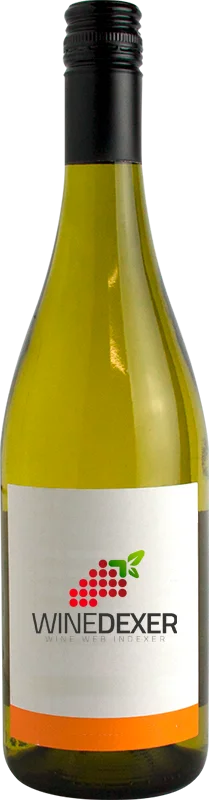
Winery CitraTibi Passerina Superiore
 White wine



In the mouth this white wine is a with a nice freshness.
This wine generally goes well with vegetarian, appetizers and snacks or lean fish.
Taste structure of the Tibi Passerina Superiore from the Winery Citra
Light | Bold | |
Dry | Sweet | |
Soft | Acidic |
In the mouth the Tibi Passerina Superiore of Winery Citra in the region of Abruzzo is a with a nice freshness.
Food and wine pairings with Tibi Passerina Superiore
Pairings that work perfectly with Tibi Passerina Superiore



Original food and wine pairings with Tibi Passerina Superiore


The Tibi Passerina Superiore of Winery Citra matches generally quite well with dishes of pasta, vegetarian or appetizers and snacks such as recipes of lasagna bolognese express, broccoli and blue cheese quiche without pastry or pan con tomate.
Details and technical informations about Winery Citra's Tibi Passerina Superiore.
Discover the grape variety: Merlese
Intraspecific crossing between sangiovese or nielluccio and merlot noir obtained in 1983 by the University of Bologna (Italy), registered since 2007 in the Italian Official Register of wine grape varieties... totally unknown in France.
Last vintages of this wine
The best vintages of Tibi Passerina Superiore from Winery Citra are 2014, 0
Informations about the Winery Citra
The Winery Citra is one of of the world's great estates. It offers 95 wines for sale in the of Abruzzo to come and discover on site or to buy online.

The wine region of Abruzzo
Abruzzo is an Italian wine region located on the eastern (Adriatic) coast. Its immediate neighbors in CentralItaly are Marche to the North, Lazio to the west and southwest and Molise to the southeast. Abruzzo has one DOCG - Montepulciano d'Abruzzo Colline Teramane - and three DOC wine appellations. The reds and Cerasuolo d'Abruzzo and Montepulciano d'Abruzzo, as well as the white wine appellation Trebbiano d'Abruzzo are the most notable, followed by the lesser-known Controguerra.
The word of the wine: Provignage
A vine reproduction technique that consists of burying a vine shoot that takes root and reproduces a plant with the same characteristics as the vine to which it is attached.