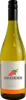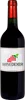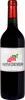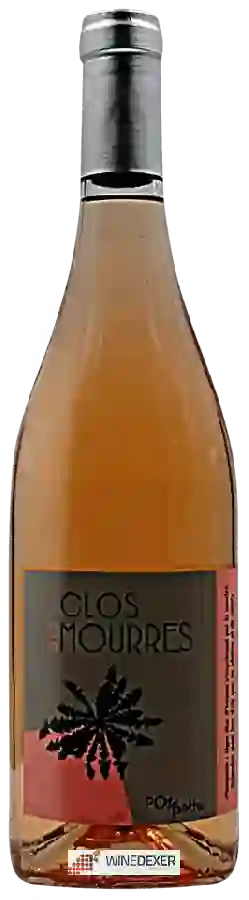
Clos des MourresPompette Rosé
 Pink wine



In the mouth this pink wine is a powerful with a nice freshness.
This wine generally goes well with pork, poultry or rich fish (salmon, tuna etc).
Taste structure of the Pompette Rosé from the Clos des Mourres
Light | Bold | |
Dry | Sweet | |
Soft | Acidic |
In the mouth the Pompette Rosé of Clos des Mourres in the region of Rhone Valley is a powerful with a nice freshness.
Food and wine pairings with Pompette Rosé
Pairings that work perfectly with Pompette Rosé



Original food and wine pairings with Pompette Rosé

The Pompette Rosé of Clos des Mourres matches generally quite well with dishes of pork, rich fish (salmon, tuna etc) or shellfish such as recipes of tripe in the style of caen, oven-baked salmon mozzarella sandwiches or spanish paella.
Details and technical informations about Clos des Mourres's Pompette Rosé.
Discover the grape variety: Dunkelfelder
Intraspecific crossing between the madeleine angevine and the dyer of Cher obtained in 1928 by Gustav Adolf (1847/1912) of the Research Institute in Geinsenheim (Germany). We can meet it certainly in Germany but also in Belgium, in Switzerland, in England, in the United States, in Canada... almost unknown in France. It should not be confused with the dornfelder, also of German origin.
Informations about the Clos des Mourres
The Clos des Mourres is one of of the world's great estates. It offers 16 wines for sale in the of Rhone Valley to come and discover on site or to buy online.

The wine region of Rhone Valley
The Rhone Valley is a key wine-producing region in Southeastern France. It follows the North-south course of the Rhône for nearly 240 km, from Lyon to the Rhône delta (Bouches-du-Rhône), near the Mediterranean coast. The Length of the valley means that Rhône wines are the product of a wide variety of soil types and mesoclimates. The viticultural areas of the region cover such a distance that there is a widely accepted division between its northern and southern parts.
The word of the wine: Local wine
Table wine, but with the origin indicated. It corresponds to a particular legislation: the freedom to use grape varieties is greater than for the AOC, but the quality criteria such as the approval tastings can sometimes be more demanding. The legislation is still evolving, but for the moment there are three levels: regional (e.g. Vin de Pays d'Oc), departmental and local (e.g. Côtes de Thongue).