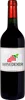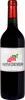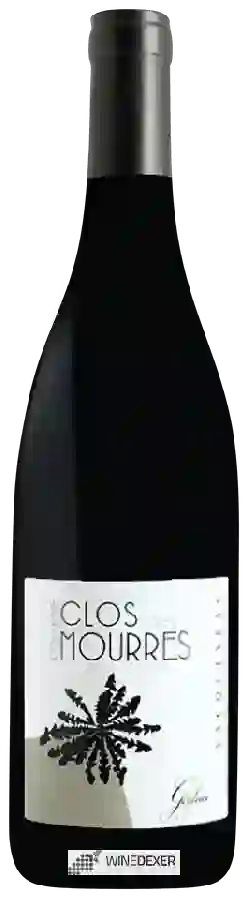
Clos des MourresGerline
 Red wine



In the mouth this red wine is a powerful with a nice balance between acidity and tannins.
This wine generally goes well with beef, game (deer, venison) or lamb.

Taste structure of the Gerline from the Clos des Mourres
Light | Bold | |
Smooth | Tannic | |
Dry | Sweet | |
Soft | Acidic |
In the mouth the Gerline of Clos des Mourres in the region of Rhone Valley is a powerful with a nice balance between acidity and tannins.
Wine flavors and olphactive analysis


On the nose the Gerline of Clos des Mourres in the region of Rhone Valley often reveals types of flavors of earthy, earth or red fruit.
Food and wine pairings with Gerline
Pairings that work perfectly with Gerline



Original food and wine pairings with Gerline
The Gerline of Clos des Mourres matches generally quite well with dishes of beef, lamb or game (deer, venison) such as recipes of puchero, lamb tagine with artichokes and dried tomatoes or rabbit with beer and mustard.
Details and technical informations about Clos des Mourres's Gerline.
Discover the grape variety: Bouillet
Simple, supple and fruity reds with a clear ruby colour, soft tannins and an airy palate with moderate acidity, showing understated aromas of red fruits. Discreet, rustic profile. Almost disappeared from commercial cultivation, preserved in INRAE varietal collections, it bears witness to the pre-phylloxera ampelographic diversity of the South-West and is among the heritage varieties being studied. Rare French black variety, formerly grown in the South-West.
Last vintages of this wine
The best vintages of Gerline from Clos des Mourres are 2013, 2017, 2014, 2018
Informations about the Clos des Mourres
The Clos des Mourres is one of of the world's greatest estates. It offers 16 wines for sale in the of Vacqueyras to come and discover on site or to buy online.

The wine region of Vacqueyras
Southern Rhône cru neighbouring Gigondas: signature Grenache as king red (≥50%) with Syrah, Mourvèdre and Cinsault - fleshy and spicy with notes of ripe black fruits (blackberry, blackcurrant, black cherry), garrigue, kirsch, liquorice, pepper and a balsamic touch, firm tannins and a long finish (14-15°), between the power of Gigondas and the elegance of Châteauneuf. Lively rosés and ample whites (Grenache Blanc, Clairette, Roussanne). AOC (1990), ~1,450 ha, stony and sandy soils.
The wine region of Rhone Valley
France's 2nd-largest AOC vineyard, two complementary worlds. Northern: pure Syrah in signature reds (Côte-Rôtie, Hermitage, Cornas), deep and peppery with blackberry, violet, black olive and smoked bacon notes, exceptional ageing. Opulent Viognier whites (Condrieu, apricot, flowers) and ample Marsanne-Roussanne. Southern: sun-soaked Grenache blends at Châteauneuf, Gigondas, Vacqueyras (candied fruit, garrigue).
The word of the wine: Muscat blanc à petits grains
A white grape variety cultivated since antiquity on the shores of the Mediterranean, it is considered the noblest of the muscats. It is mainly used to make sweet wines, often from mutage. In France, it is the sole variety used in many natural sweet wines: muscat-de-frontignan, muscat-de-mireval, muscat-de-lunel, muscat-de-saint-jean-de-minervois, muscat-de-beaumes-de-venise, muscat-du-cap-corse. Combined with Muscat d'Alexandrie, it gives Muscat-de-Rivesaltes. It is also used to make sparkling white wines (clairette-de-die; moscato d'asti and asti spumante in Italy) and dry wines (alsace-muscat). Powerfully aromatic and complex, its wines evoke fresh grapes, roses, exotic fruits, citrus fruits and spices.