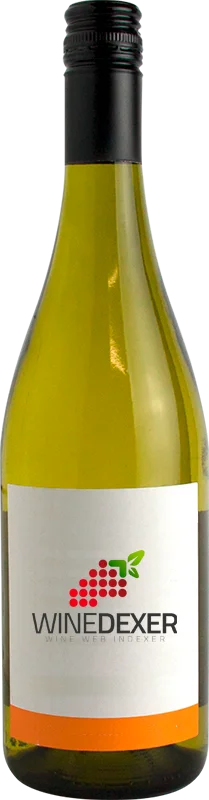
Clos de l'AmandaieLes Ménades
 White wine


In the mouth this white wine is a .
This wine generally goes well with vegetarian, poultry or lean fish.
Taste structure of the Les Ménades from the Clos de l'Amandaie
Light | Bold | |
Dry | Sweet | |
Soft | Acidic |
In the mouth the Les Ménades of Clos de l'Amandaie in the region of Languedoc-Roussillon is a .
Food and wine pairings with Les Ménades
Pairings that work perfectly with Les Ménades



Original food and wine pairings with Les Ménades


The Les Ménades of Clos de l'Amandaie matches generally quite well with dishes of pasta, vegetarian or poultry such as recipes of eggplant lasagna, nanie's diced ham quiche or honey chicken salad.
Details and technical informations about Clos de l'Amandaie's Les Ménades.
Discover the grape variety: Petit Manseng
Petit Manseng is a white grape variety of Pyrenean origin. Its small berries have a hard, well-ventilated skin, which allows Petit Manseng to resist grey rot. On the other hand, this variety is very sensitive to noble rot, which concentrates the aromas and makes it possible to produce remarkable sweet wines with flavours of exotic fruits, grapefruit, honey, gingerbread, etc. Rich in alcohol and acidity, these wines are very well balanced and very fine. petit manseng also produces fruity dry white wines. It is also used in the AOC Béarn, Jurançon, Pacherenc-du-Vic-Bilh, Tursan...
Informations about the Clos de l'Amandaie
The Clos de l'Amandaie is one of of the world's greatest estates. It offers 11 wines for sale in the of Languedoc-Roussillon to come and discover on site or to buy online.

The wine region of Languedoc-Roussillon
Languedoc (formerly Coteaux du Languedoc) is a key appellation used in the Languedoc-Roussillon wine region of southern France. It covers Dry table wines of all three colors (red, white and rosé) from the entire region, but leaves Sweet and Sparkling wines to other more specialized appellations. About 75% of all Languedoc wines are red, with the remaining 25% split roughly down the middle between whites and rosés. The appellation covers most of the Languedoc region and almost a third of all the vineyards in France.
The word of the wine: Guyot (pruning)
This is the most widespread pruning technique. It includes one or two long branches and allows the mechanization of a large number of vineyard operations.