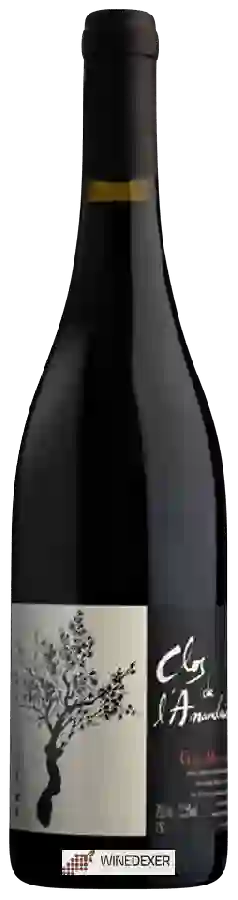
Clos de l'AmandaieGrés de Montpellier
 Red wine



In the mouth this red wine is a powerful with a nice balance between acidity and tannins.
This wine generally goes well with beef, veal or pasta.
Taste structure of the Grés de Montpellier from the Clos de l'Amandaie
Light | Bold | |
Smooth | Tannic | |
Dry | Sweet | |
Soft | Acidic |
In the mouth the Grés de Montpellier of Clos de l'Amandaie in the region of Languedoc-Roussillon is a powerful with a nice balance between acidity and tannins.
Wine flavors and olphactive analysis





On the nose the Grés de Montpellier of Clos de l'Amandaie in the region of Languedoc-Roussillon often reveals types of flavors of oaky, smoke or black fruits and sometimes also flavors of non oak, earth or microbio.
Food and wine pairings with Grés de Montpellier
Pairings that work perfectly with Grés de Montpellier



Original food and wine pairings with Grés de Montpellier
The Grés de Montpellier of Clos de l'Amandaie matches generally quite well with dishes of beef, pasta or veal such as recipes of provencal stew, spaghetti with salmon or delicious veal stew.
Details and technical informations about Clos de l'Amandaie's Grés de Montpellier.
Discover the grape variety: Sultanine
Most certainly finding its first origins in Persia, today Iran. It is registered in the Official Catalogue of table grape varieties list A1. Note that the variety gora chirine, also finding its first origins in Iran (Azerbaijan), is a mutation of the Sultanine, its berries of white or pink color being slightly larger.
Last vintages of this wine
The best vintages of Grés de Montpellier from Clos de l'Amandaie are 2016, 2017, 2015, 2014 and 2013.
Informations about the Clos de l'Amandaie
The Clos de l'Amandaie is one of of the world's greatest estates. It offers 11 wines for sale in the of Languedoc to come and discover on site or to buy online.

The wine region of Languedoc
Languedoc (formerly Coteaux du Languedoc) is a key appellation used in the Languedoc-Roussillon wine region of southern France. It covers Dry table wines of all three colors (red, white and rosé) from the entire region, but leaves Sweet and Sparkling wines to other more specialized appellations. About 75% of all Languedoc wines are red, with the remaining 25% split roughly down the middle between whites and rosés. The appellation covers most of the Languedoc region and almost a third of all the vineyards in France.
The wine region of Languedoc-Roussillon
Languedoc (formerly Coteaux du Languedoc) is a key appellation used in the Languedoc-Roussillon wine region of southern France. It covers Dry table wines of all three colors (red, white and rosé) from the entire region, but leaves Sweet and Sparkling wines to other more specialized appellations. About 75% of all Languedoc wines are red, with the remaining 25% split roughly down the middle between whites and rosés. The appellation covers most of the Languedoc region and almost a third of all the vineyards in France.
The word of the wine: Leaflet
Small barrel with a capacity of 112 to 136 litres depending on the region.