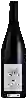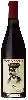
Château de LascauxVieilles Vignes
 Red wine



In the mouth this red wine is a powerful with a nice balance between acidity and tannins.
This wine generally goes well with beef, veal or pasta.
Taste structure of the Vieilles Vignes from the Château de Lascaux
Light | Bold | |
Smooth | Tannic | |
Dry | Sweet | |
Soft | Acidic |
In the mouth the Vieilles Vignes of Château de Lascaux in the region of Languedoc-Roussillon is a powerful with a nice balance between acidity and tannins.
Food and wine pairings with Vieilles Vignes
Pairings that work perfectly with Vieilles Vignes



Original food and wine pairings with Vieilles Vignes
The Vieilles Vignes of Château de Lascaux matches generally quite well with dishes of beef, pasta or veal such as recipes of beef bourguignon in the oven of nanou, eggplant lasagna or stuffed quails.
Details and technical informations about Château de Lascaux's Vieilles Vignes.
Discover the grape variety: Dan ben Hannah
A cross between the black mikveh (Hamburg muscatel x black balouti) and the Alphonse Lavallée obtained in 1951 and in Israel by Netanel Hochberg. Dan ben Hannah or black emperor - not to be confused with emperor - is mainly grown in South Africa.
Last vintages of this wine
The best vintages of Vieilles Vignes from Château de Lascaux are 2016
Informations about the Château de Lascaux
The Château de Lascaux is one of of the world's great estates. It offers 21 wines for sale in the of Languedoc to come and discover on site or to buy online.

The wine region of Languedoc
Languedoc (formerly Coteaux du Languedoc) is a key appellation used in the Languedoc-Roussillon wine region of southern France. It covers Dry table wines of all three colors (red, white and rosé) from the entire region, but leaves Sweet and Sparkling wines to other more specialized appellations. About 75% of all Languedoc wines are red, with the remaining 25% split roughly down the middle between whites and rosés. The appellation covers most of the Languedoc region and almost a third of all the vineyards in France.
The wine region of Languedoc-Roussillon
Languedoc (formerly Coteaux du Languedoc) is a key appellation used in the Languedoc-Roussillon wine region of southern France. It covers Dry table wines of all three colors (red, white and rosé) from the entire region, but leaves Sweet and Sparkling wines to other more specialized appellations. About 75% of all Languedoc wines are red, with the remaining 25% split roughly down the middle between whites and rosés. The appellation covers most of the Languedoc region and almost a third of all the vineyards in France.
The word of the wine: Volatile acidity
Acidity resulting essentially from alcoholic fermentation and formed from acetic acids in the free state.