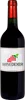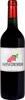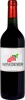
Cave La TineRouge d’Automne Vin de liqueur
 Sweet wine
This wine generally goes well with beef, lamb or mature and hard cheese.
Food and wine pairings with Rouge d’Automne Vin de liqueur
Pairings that work perfectly with Rouge d’Automne Vin de liqueur



Original food and wine pairings with Rouge d’Automne Vin de liqueur

The Rouge d’Automne Vin de liqueur of Cave La Tine matches generally quite well with dishes of beef, lamb or spicy food such as recipes of boeuf lôc lac (cambodia), merguez - courgettes gratin (leftover barbecue) or salmon steak on a bed of leeks.
Details and technical informations about Cave La Tine's Rouge d’Automne Vin de liqueur.
Discover the grape variety: Millot Léon
Interspecific crossing between the 101-14 Millardet and Grasset (vitis riparia X vitis rupestris) and the goldriesling obtained by Eugène Kühlmann (1858-1932) around 1911 and marketed around 1921. With these same parents, he obtained among others the Maréchal Foch. Léon Millot is still found in Canada, the United States, Switzerland, Germany, Belgium, Denmark, Sweden, the Netherlands, Poland and England. In France, where it was grown for a long time in Alsace, it is no longer grown in the vineyards, although it is listed in the Official Catalogue of Vine Varieties, list A.
Informations about the Cave La Tine
The Cave La Tine is one of of the world's great estates. It offers 30 wines for sale in the of Valais to come and discover on site or to buy online.

The wine region of Valais
The Valais is the largest wine region and appellation in Switzerland, responsible for around one third of the country's total wine production. The main Vineyard area covers the southeast-facing slopes of the dramatic Rhône river valley as the glacial waters run southwest between Leuk (Loeche in French) and Fully. The river changes direction at Martigny and then runs northwest to exit the valley and empty into Lac Léman (Lake Geneva). Vineyard area here comes to around 4,800 hectares (11,800 acres) and is generally located on (often steep) slopes and terraces between the flat, fertile, Heavy soils at the bottom of the valley - often given over to fruit production, industry and urban development - and the bare rock of the mountainside that towers above.
The word of the wine: Tasting
Sensory analysis of the wine according to a precise procedure and steps, using an appropriate vocabulary.