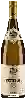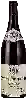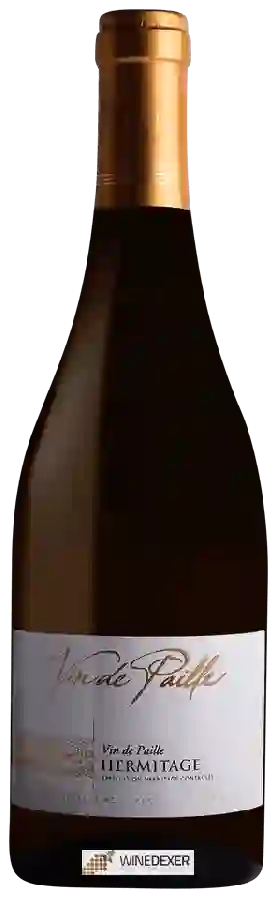
Cave de TainVin de Paille Hermitage Blanc
 White wine


This wine generally goes well with pork and shellfish.

Wine flavors and olphactive analysis



On the nose the Vin de Paille Hermitage Blanc of Cave de Tain in the region of Rhone Valley often reveals types of flavors of microbio.
Food and wine pairings with Vin de Paille Hermitage Blanc
Pairings that work perfectly with Vin de Paille Hermitage Blanc


Original food and wine pairings with Vin de Paille Hermitage Blanc
The Vin de Paille Hermitage Blanc of Cave de Tain matches generally quite well with dishes of pork or shellfish such as recipes of ham with leek fondue or scallops with saffron.
Details and technical informations about Cave de Tain's Vin de Paille Hermitage Blanc.
Discover the grape variety: Marsanne
Rich, structured whites with a round palate and long finish, with aromas of ripe yellow fruits, honey, white flowers, toasted almond and mineral notes. Fine ageing potential, developing waxy and truffle nuances with age. Key variety in the great whites of the northern Rhône (Hermitage, Crozes-Hermitage, Saint-Joseph, Saint-Péray) blended with roussanne. Also exported to Australia (Victoria) and California. Native Rhône variety.
Informations about the Cave de Tain
The Cave de Tain is one of of the world's great estates. It offers 219 wines for sale in the of Hermitage to come and discover on site or to buy online.

The wine region of Hermitage
Mythical northern Rhône cru on the eponymous hill on the left bank: signature Syrah as ruling red (≤15% Marsanne/Roussanne allowed) — dark robe, intense aromas of blackberry, blackcurrant, spice, pepper, clove and violet, powerful texture and racy tannins, decade-long ageing. Signature Marsanne and Roussanne as ruling whites — white flowers (hawthorn, honeysuckle), dried fruits, honey and a buttery touch, aromatic finesse. AOC 1937, granite slopes, Massif Central.
The wine region of Rhone Valley
France's 2nd-largest AOC vineyard, two complementary worlds. Northern: pure Syrah in signature reds (Côte-Rôtie, Hermitage, Cornas), deep and peppery with blackberry, violet, black olive and smoked bacon notes, exceptional ageing. Opulent Viognier whites (Condrieu, apricot, flowers) and ample Marsanne-Roussanne. Southern: sun-soaked Grenache blends at Châteauneuf, Gigondas, Vacqueyras (candied fruit, garrigue).
The word of the wine: Cryo-extraction
This technique was very popular at the end of the 80's in Sauternes, a little less so now. The grapes are frozen before pressing, and the water transformed into ice remains in the marc, only the sugar flows out. As with the concentrators, the "cryo" can also increase bad taste and greenness.