The Winery Castrum Morisci of Marche

Winery Castrum Morisci
The winery offers 11 different wines
3.9


Note - 1Note - 1Note - 1Note - 1Note - 0
Its wines get an average rating of 3.9.
It is currently not ranked among the best domains of Marche.
It is located in Marche

The Winery Castrum Morisci is one of the best wineries to follow in Marches.. It offers 11 wines for sale in of Marche to come and discover on site or to buy online.


Top Winery Castrum Morisci wines

Looking for the best Winery Castrum Morisci wines in Marche among all the wines in the region? Check out our tops of the best red, white or effervescent Winery Castrum Morisci wines. Also find some food and wine pairings that may be suitable with the wines from this area. Learn more about the region and the Winery Castrum Morisci wines with technical and enological descriptions.

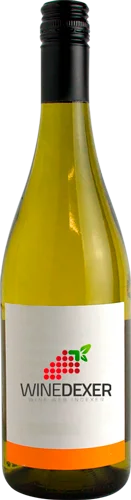
The top white wines of Winery Castrum Morisci

Food and wine pairings with a white wine of Winery Castrum Morisci

How Winery Castrum Morisci wines pair with each other generally quite well with dishes of pasta, vegetarian or appetizers and snacks such as recipes of pasta with tuna, garlic and lemon cream, vegan leek and tofu quiche or boquerones anchovies in vinegar.

Organoleptic analysis of white wines of Winery Castrum Morisci

On the nose the white wine of Winery Castrum Morisci. often reveals types of flavors of earth, citrus fruit. In the mouth the white wine of Winery Castrum Morisci. is a powerful with a nice freshness.

The best vintages in the white wines of Winery Castrum Morisci

  • 0With an average score of 3.79/5
  • 2018With an average score of 3.77/5
  • 2019With an average score of 3.70/5

The grape varieties most used in the white wines of Winery Castrum Morisci.

  • Pecorino
  • Passerina
  • Vermentino
  • Malvasia
  • Moscato

Discovering the wine region of Marche

Marche (or Le Marche; pronounced Mar-kay) is a region in eastern CentralItaly. It is most associated with white wines made from Trebbiano and Verdicchio grapes. Marche occupies a roughly triangular area. Its longer sides are formed by the Apennine Mountains to the west and the Adriatic Sea to the east.

Emilia-Romagna and Abruzzo are its northern and southern neighbours respectively, and it is separated from Umbria only by the Apennines. The Marche has a number of terroirs that are very well suited to grape-growing. The rolling coastal hills, such as those around Ancona, are a notable example. Due to the influence of the Apennines, the Adriatic and the rivers of the region (the Metauro, the Potenza, the Tronto and the Nera), the Marche is subject to different climates.

The top red wines of Winery Castrum Morisci

Food and wine pairings with a red wine of Winery Castrum Morisci

How Winery Castrum Morisci wines pair with each other generally quite well with dishes of beef, pasta or veal such as recipes of traditional hungarian goulash, cannelloni au gratin stuffed with bolognese sauce or pasta with veal stock sauce.

Organoleptic analysis of red wines of Winery Castrum Morisci

On the nose the red wine of Winery Castrum Morisci. often reveals types of flavors of earth, red fruit or black fruit and sometimes also flavors of floral. In the mouth the red wine of Winery Castrum Morisci. is a powerful with a nice balance between acidity and tannins.

The best vintages in the red wines of Winery Castrum Morisci

  • 2017With an average score of 4.09/5
  • 0With an average score of 4.05/5
  • 2018With an average score of 4.04/5

The grape varieties most used in the red wines of Winery Castrum Morisci.

  • Sangiovese
  • Cabernet Sauvignon
  • Merlot
  • Montepulciano

Discover the grape variety: Vermentino

The vermentino grape variety was widespread in Italy, Sardinia and Corsica. Today, Vermentino is grown in the regions bordering the Mediterranean, mainly in Provence (Côtes de Provence, Bellet), Corsica (Corse Calvi), Languedoc (Côtes du Roussillon, Costières de Nîmes) and the Rhône Valley (Côtes du Luberon). Because it ripens late, Vermentino requires a warm climate for its development and can only be grown in regions with good sun exposure. Conversely, cold or temperate climates do not allow it to ripen properly. Vermentino is only susceptible to powdery mildew. When vinified on its own, Vermentino produces a single-variety dry white wine that is light and full-bodied with a pale yellow color. It can also be blended with other grape varieties such as Ugni Blanc, Cinsault and Grenache, in which case its low acidity makes it light and fresh. Vermentino belongs to the grape varieties of Ajaccio, Corsica and Corbières. The aromas released by this variety are multiple. One can detect notes of fresh apple, green almond, sweet spices, hawthorn, ripe pear and fresh pineapple.

The top pink wines of Winery Castrum Morisci

Food and wine pairings with a pink wine of Winery Castrum Morisci

How Winery Castrum Morisci wines pair with each other generally quite well with dishes of beef, veal or pork such as recipes of stewed beef heart, veal escalope (piccata milanese) or delicious marinated pork chops.

Organoleptic analysis of pink wines of Winery Castrum Morisci

On the nose the pink wine of Winery Castrum Morisci. often reveals types of flavors of red fruit.

The best vintages in the pink wines of Winery Castrum Morisci

  • 2016With an average score of 4.10/5
  • 0With an average score of 4.10/5

The grape varieties most used in the pink wines of Winery Castrum Morisci.

  • Sangiovese

The word of the wine: Lyon pot

A 46 cl bottle with a thick bottom, typical of the Lyon region, especially used to serve Beaujolais wines drawn from the barrel.

Discover other wineries and winemakers neighboring the Winery Castrum Morisci

Planning a wine route in the of Marche? Here are the wineries to visit and the winemakers to meet during your trip in search of wines similar to Winery Castrum Morisci.

Discover the grape variety: Pecorino

A very old vine cultivated in Italy and very well known in particular in the Marche and Abruzzo regions, a trace of it has been found as far back as the second century B.C. where it is stated that it would have its first origins in Greece... almost unknown in France.