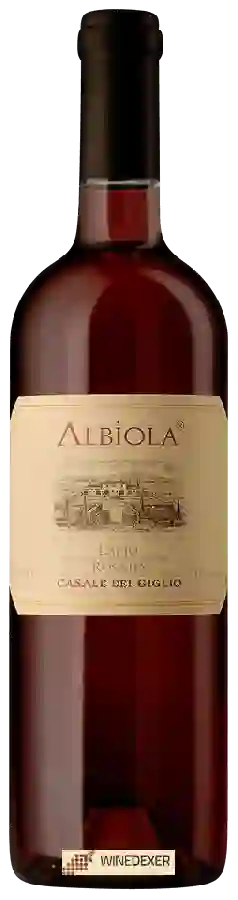
Winery Casale del GiglioAlbìola Lazio Rosato
 Pink wine



This wine generally goes well with pork, poultry or beef.
Wine flavors and olphactive analysis

On the nose the Albìola Lazio Rosato of Winery Casale del Giglio in the region of Lazio often reveals types of flavors of microbio, citrus fruit or red fruit.
Food and wine pairings with Albìola Lazio Rosato
Pairings that work perfectly with Albìola Lazio Rosato



Original food and wine pairings with Albìola Lazio Rosato



The Albìola Lazio Rosato of Winery Casale del Giglio matches generally quite well with dishes of beef, lamb or veal such as recipes of pastasciutta (corsica), mansaf, or jordanian lamb (jordan) or veal chop with mushrooms.
Details and technical informations about Winery Casale del Giglio's Albìola Lazio Rosato.
Discover the grape variety: Sangiovese
Originally from Italy, it is the famous Sangiovese of Tuscany producing the famous wines of Brunello de Montalcino and Chianti. This variety is registered in the Official Catalogue of Wine Grape Varieties, list A1. According to recent genetic analysis, it is the result of a natural cross between the almost unknown Calabrese di Montenuovo (mother) and Ciliegiolo (father).
Last vintages of this wine
The best vintages of Albìola Lazio Rosato from Winery Casale del Giglio are 2014, 2012, 2019, 2018 and 0.
Informations about the Winery Casale del Giglio
The Winery Casale del Giglio is one of of the world's great estates. It offers 25 wines for sale in the of Lazio to come and discover on site or to buy online.

The wine region of Lazio
Lazio is a region in CentralItaly, where the ancient capital of Rome is located. The region's reputation is based primarily on its white wines, the main varieties of which are Trebbiano, Malvasia di Candia and Malvasia Puntinata. Traditionally, these wines were fat, Round, abboccato and intended for immediate consumption. Today, the styles are lighter, drier and crisper thanks to modern winemaking methods.
The word of the wine: Vintage scale
Complex system of classification of the communes of Champagne according to the value of the grapes which are produced there. In other regions, hierarchical situation of the productions classified by various authorities.