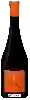
Winery Campo Al MoroToscana
 Red wine



In the mouth this red wine is a with a nice freshness.
This wine generally goes well with poultry, beef or veal.
Taste structure of the Toscana from the Winery Campo Al Moro
Light | Bold | |
Smooth | Tannic | |
Dry | Sweet | |
Soft | Acidic |
In the mouth the Toscana of Winery Campo Al Moro in the region of Tuscany is a with a nice freshness.
Wine flavors and olphactive analysis




On the nose the Toscana of Winery Campo Al Moro in the region of Tuscany often reveals types of flavors of non oak, earth or oak and sometimes also flavors of spices, red fruit or black fruit.
Food and wine pairings with Toscana
Pairings that work perfectly with Toscana



Original food and wine pairings with Toscana


The Toscana of Winery Campo Al Moro matches generally quite well with dishes of beef, lamb or veal such as recipes of kamounia : tunisian beef stew, shoulder of lamb stuffed with cognac or axoa from espelette ( 22nd meeting ).
Details and technical informations about Winery Campo Al Moro's Toscana.
Discover the grape variety: Feteasca neagra
A very old variety native to Romania, found much more in Romanian Moldavia and Wallachia, almost unknown in France, but registered in the Official Catalogue of Wine Grape Varieties, list A2. According to Viala and Vermorel, it is the black form of feteasca alba. It should not be confused with feteasca regala.
Last vintages of this wine
The best vintages of Toscana from Winery Campo Al Moro are 2011, 2018, 2012, 0 and 2016.
Informations about the Winery Campo Al Moro
The Winery Campo Al Moro is one of of the world's greatest estates. It offers 7 wines for sale in the of Tuscany to come and discover on site or to buy online.

The wine region of Tuscany
Tuscany is one of the most famous and prolific wine regions in Europe. It is best known for its Dry red wines made from Sangiovese grapes, which dominate production. These include Chianti, Brunello di Montalcino and Vino Nobile di Montepulciano. The region's Vin Santo is also highly prized, as are its passito dessert wines, though these are produced in comparatively tiny quantities.
The word of the wine: Maceration
Prolonged contact and exchange between the juice and the grape solids, especially the skin. Not to be confused with the time of fermentation, which follows maceration. The juice becomes loaded with colouring matter and tannins, and acquires aromas. For a rosé, the maceration is short so that the colour does not "rise" too much. For white wines too, a "pellicular maceration" can be practised, which allows the wine to acquire more fat.