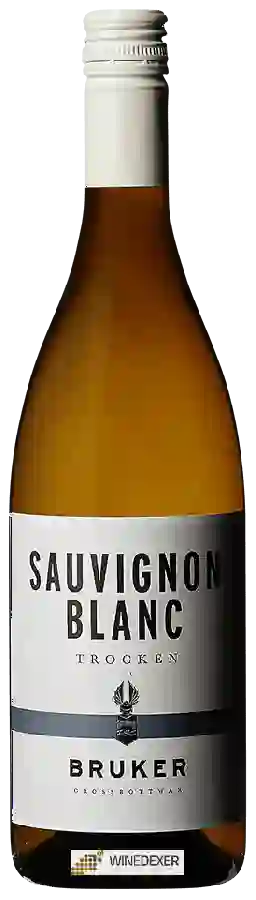
Winery BrukerSauvignon Blanc Trocken
 White wine



In the mouth this white wine is a with a nice freshness.
This wine generally goes well with vegetarian, shellfish or goat cheese.

Taste structure of the Sauvignon Blanc Trocken from the Winery Bruker
Light | Bold | |
Dry | Sweet | |
Soft | Acidic |
In the mouth the Sauvignon Blanc Trocken of Winery Bruker in the region of Württemberg is a with a nice freshness.


Food and wine pairings with Sauvignon Blanc Trocken
Pairings that work perfectly with Sauvignon Blanc Trocken



Original food and wine pairings with Sauvignon Blanc Trocken
The Sauvignon Blanc Trocken of Winery Bruker matches generally quite well with dishes of shellfish, vegetarian or goat cheese such as recipes of shrimp curry and coconut (thailand), vegan leek and tofu quiche or provençal tart with tomato and goat cheese.
Details and technical informations about Winery Bruker's Sauvignon Blanc Trocken.
Discover the grape variety: Victoria
Table grape with long bunches and elongated golden to pinkish berries, thin skin and crunchy flesh, with a sweet, fresh flavour. Early ripening and productive. Grown in Romania, Bulgaria and Hungary for fresh consumption, prized for its attractive market appearance and early maturity allowing early harvests. Romanian grey/white table grape variety obtained by crossing for fresh consumption.
Last vintages of this wine
The best vintages of Sauvignon Blanc Trocken from Winery Bruker are 2016, 2014, 0, 2015
Informations about the Winery Bruker
The Winery Bruker is one of of the world's greatest estates. It offers 51 wines for sale in the of Württemberg to come and discover on site or to buy online.

The wine region of Württemberg
Rare predominantly red region in Germany (nearly 70%). Supple, fruity everyday reds: light, crisp Trollinger (Schiava) with red fruits, more structured, spicy, deep Lemberger (Blaufränkisch), generous Schwarzriesling (Pinot Meunier). Riesling king of whites (>2,000 ha), lively and mineral, citrus and green apple. Germany's 4th region (11,500 ha) on the Neckar slopes around Heilbronn and Stuttgart.
The word of the wine: Filling
Gentle transfer from one barrel to another to oxygenate the wine, eliminate some of the lees and reduce the carbon dioxide (fizz) that was released during the fermentations.