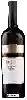
Winery Borgo MastroNero di Troia
 Red wine
In the mouth this red wine is a powerful with a lot of tannins present in the mouth.
This wine generally goes well with beef, lamb or pasta.
Taste structure of the Nero di Troia from the Winery Borgo Mastro
Light | Bold | |
Smooth | Tannic | |
Dry | Sweet | |
Soft | Acidic |
In the mouth the Nero di Troia of Winery Borgo Mastro in the region of Puglia is a powerful with a lot of tannins present in the mouth.
Food and wine pairings with Nero di Troia
Pairings that work perfectly with Nero di Troia



Original food and wine pairings with Nero di Troia
The Nero di Troia of Winery Borgo Mastro matches generally quite well with dishes of beef, pasta or lamb such as recipes of scottish haggis, salmon and spinach lasagna or moroccan lamb shoulder.
Details and technical informations about Winery Borgo Mastro's Nero di Troia.
Discover the grape variety: Rolle
Rolle is a white grape variety of Turkish origin that has become established in the South of France, particularly in the Var region, in Corsica under the name of Vermentinu, and in Italy. Its bunches and berries, of medium size, change from white to pink when the grapes are ripe. The rolle likes hot climates where the soil is dry and poor. On the other hand, it fears the wind and diseases. It produces fat, well-balanced white wines. These wines may lack acidity, but they are still very aromatic and give off notes of grapefruit, white fruit, white flowers, fennel, etc. Rolle is also a good table grape that can be enjoyed both fresh and dry. Present in Provence, Languedoc, Roussillon and Corsica. It is used in the composition of numerous appellations such as Ajaccio, Patrimonio, Bandol, Coteaux-d'Aix-en-Provence, Côtes-de-Provence, Costières-de-Nîmes, Corbières, Collioure, Côtes-de-Roussillon, Minervois, Saint Chinian...
Informations about the Winery Borgo Mastro
The Winery Borgo Mastro is one of of the world's greatest estates. It offers 3 wines for sale in the of Puglia to come and discover on site or to buy online.

The wine region of Puglia
Puglia (Apulia to many English speakers) is a Long, slender wine region in the extreme Southeast corner of Italy's "boot". To use the shoe analogy often used to illustrate the shape of Italy, Apulia extends from the tip of the heel to the mid-calf, where the spur of the Gargano Peninsula juts out into the Adriatic Sea. The heel (the Salento peninsula) occupies the southern half of the region and is of great importance for the identity of Puglia. Not only are there cultural and geographical differences from Northern Puglia, but the wines are also different.
The word of the wine: Roast (taste of)
Characteristic taste of wines made from grapes affected by botrytis cinerea.