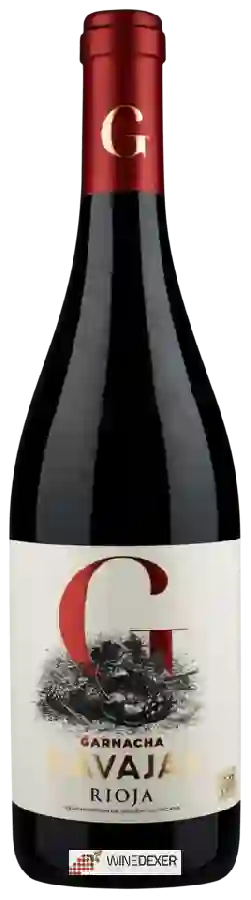
Winery NavajasGarnacha
 Red wine


In the mouth this red wine is a powerful with a nice balance between acidity and tannins.
This wine generally goes well with poultry, beef or veal.

Taste structure of the Garnacha from the Winery Navajas
Light | Bold | |
Smooth | Tannic | |
Dry | Sweet | |
Soft | Acidic |
In the mouth the Garnacha of Winery Navajas in the region of Rioja is a powerful with a nice balance between acidity and tannins.
Wine flavors and olphactive analysis

Food and wine pairings with Garnacha
Pairings that work perfectly with Garnacha



Original food and wine pairings with Garnacha

The Garnacha of Winery Navajas matches generally quite well with dishes of beef, lamb or veal such as recipes of beef pot au feu (grandma's style), leg of lamb in braillouse or sauté of doe stroganoff.
Details and technical informations about Winery Navajas's Garnacha.
Discover the grape variety: Marzemino
Supple and fruity reds with a clear ruby colour and melted tannins, on intense aromas of red fruits (cherry, raspberry), plum, violet, sweet spices and herbal notes. Round palate, fresh finish. Star of Trentino Marzemino DOC (notably in the Vallagarina valley, southern Trentino), celebrated by Mozart in Don Giovanni ("versa il vino, eccellente Marzemino!"). Also grown in Lombardy. Native Italian variety from the north-east.
Last vintages of this wine
The best vintages of Garnacha from Winery Navajas are 2018, 0
Informations about the Winery Navajas
The Winery Navajas is one of of the world's great estates. It offers 46 wines for sale in the of Rioja to come and discover on site or to buy online.

The wine region of Rioja
Star of great Spanish reds: signature Tempranillo, elegant and complex, with notes of ripe cherry, plum, leather, vanilla and tobacco from American oak ageing. Classification by age: fruity Joven, balanced Crianza, ample Reserva, deep, silky Gran Reserva (5 years, 2 in barrel). Some fresh Viura whites and generous rosés. Spain's first DOCa (1991), 3 sub-zones (Alta, Alavesa, Oriental), 93.
The word of the wine: Erinosis
Generally benign condition caused by a very small mite. The infested leaves show blisters on the upper surface, sometimes reddish, sometimes green, to which corresponds on the lower surface a dense felting, first pinkish white, then brownish or reddish.