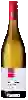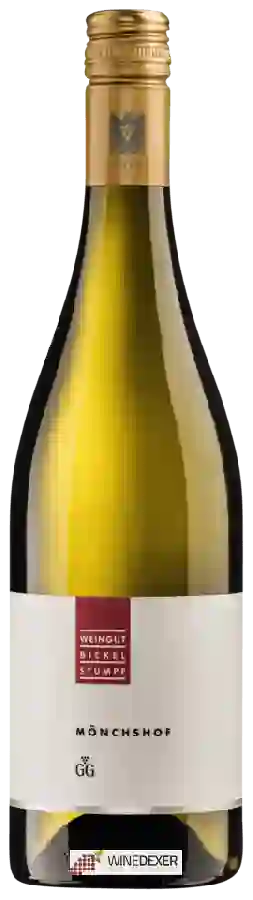
Winery Bickel StumpfMönchshof GG
 White wine


In the mouth this white wine is a with a nice freshness.
This wine generally goes well with pork, vegetarian or poultry.

Taste structure of the Mönchshof GG from the Winery Bickel Stumpf
Light | Bold | |
Dry | Sweet | |
Soft | Acidic |
In the mouth the Mönchshof GG of Winery Bickel Stumpf in the region of Franken is a with a nice freshness.
Food and wine pairings with Mönchshof GG
Pairings that work perfectly with Mönchshof GG



Original food and wine pairings with Mönchshof GG


The Mönchshof GG of Winery Bickel Stumpf matches generally quite well with dishes of veal, pork or vegetarian such as recipes of porcini sauce, peasant minestrone or zucchini and goat cheese quiche.
Details and technical informations about Winery Bickel Stumpf's Mönchshof GG.
Discover the grape variety: Seyval blanc
Lively, taut whites with a slender palate and fresh acidity, with aromas of citrus (lemon, grapefruit), green apple, white flowers, pear and discreet herbal notes. Refreshing finish; best drunk young. A cold- and disease-resistant interspecific variety, it produces whites and sparkling wines in the UK (Kent, Sussex), Canada (Quebec, Ontario) and the northeastern US. French hybrid created by Bertille Seyve (Seyve-Villard 5-276).
Last vintages of this wine

The best vintages of Mönchshof GG from Winery Bickel Stumpf are 0, 2013
Informations about the Winery Bickel Stumpf
The Winery Bickel Stumpf is one of of the world's greatest estates. It offers 38 wines for sale in the of Franken to come and discover on site or to buy online.

The wine region of Franken
Homeland of German Silvaner: dry, straight, mineral and lively whites with notes of green apple, citrus, fresh herbs and a saline touch, planted here for over 350 years (1,500 ha, a quarter of the vineyard). Also supple, floral Müller-Thurgau, taut Riesling, aromatic Bacchus. Some discreet reds (Spätburgunder). 6,040 ha in Bavaria along the Main around Würzburg, red sandstone and shell-limestone soils.
The word of the wine: Aroma
A pleasant smell that can be primary (or varietal, i.e. characteristic of the grape), secondary (resulting from fermentation) or tertiary (resulting from the aging of the wine in the bottle).