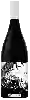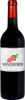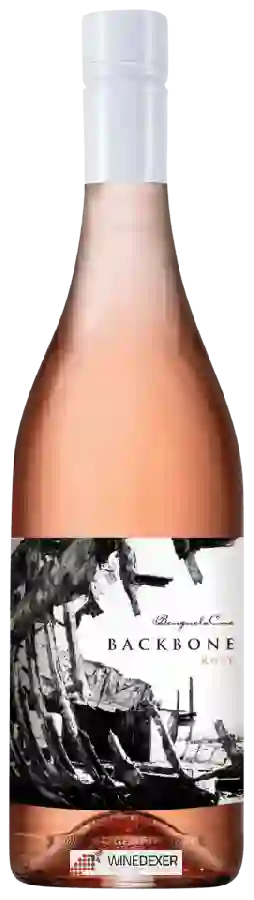
Winery Benguela CoveBackbone Rosé
 Pink wine
This wine generally goes well with beef, lamb or mature and hard cheese.
Food and wine pairings with Backbone Rosé
Pairings that work perfectly with Backbone Rosé



Original food and wine pairings with Backbone Rosé

The Backbone Rosé of Winery Benguela Cove matches generally quite well with dishes of beef, lamb or spicy food such as recipes of tournedos rossini, lamb tagine with vegetables and preserved lemons or turkey escalope with curry.
Details and technical informations about Winery Benguela Cove's Backbone Rosé.
Discover the grape variety: Foch
Interspecific crossing between 101-14 Millardet and Grasset (vitis riparia X vitis rupestris) and the goldriesling obtained by Eugène Kühlmann around 1911. With these same parents, he obtained among others the Léon Millot. Maréchal Foch is still found in Canada (Quebec) where it is the first black grape variety, in the north-east of the United States, etc. In France, it is hardly present in the vineyard any more, although it is registered in the Official Catalogue of Vine Varieties list A.
Informations about the Winery Benguela Cove
The Winery Benguela Cove is one of of the world's great estates. It offers 34 wines for sale in the of Walker Bay to come and discover on site or to buy online.

The wine region of Walker Bay
The wine region of Walker Bay is located in the region of Cape South Coast of Western Cape of South Africa. Wineries and vineyards like the Domaine Bouchard Finlayson or the Domaine Creation produce mainly wines red, white and pink. The most planted grape varieties in the region of Walker Bay are Chardonnay, Pinot noir and Pinotage, they are then used in wines in blends or as a single variety. On the nose of Walker Bay often reveals types of flavors of raspberry, mocha or mango and sometimes also flavors of guava, passion fruit or grass.
The wine region of Western Cape
The Western Cape is home to the vast majority of the South African wine industry, and the country's two most famous wine regions, Stellenbosch and Paarl. The city of Cape Town serves as the epicenter of the Cape Winelands, a mountainous, biologically diverse area in the south-western corner of the African continent. A wide variety of wines are produced here. Wines from the Shiraz and Pinotage">Pinotage grape varieties can be fresh and juicy or Full-bodied and gutsy.
The word of the wine: Extraction
All the methods (pumping over, punching down) that allow the colour and tannins to be extracted from the grape skin during maceration, before fermentation begins. It is also possible to macerate after fermentation, but gently, so as not to extract the tannins from the seeds, which are greener. Because of its solvent power, alcohol favours extraction.