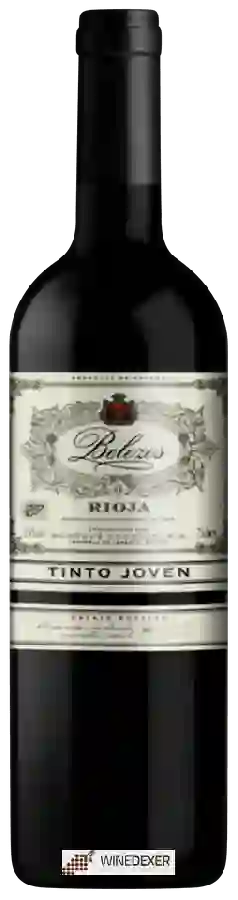
Winery BelezosTinto Joven
 Red wine



In the mouth this red wine is a powerful with a nice balance between acidity and tannins.
This wine generally goes well with poultry, beef or veal.

Taste structure of the Tinto Joven from the Winery Belezos
Light | Bold | |
Smooth | Tannic | |
Dry | Sweet | |
Soft | Acidic |
In the mouth the Tinto Joven of Winery Belezos in the region of Rioja is a powerful with a nice balance between acidity and tannins.


Food and wine pairings with Tinto Joven
Pairings that work perfectly with Tinto Joven



Original food and wine pairings with Tinto Joven

The Tinto Joven of Winery Belezos matches generally quite well with dishes of beef, lamb or veal such as recipes of roast beef with caramelized onion, tanjia (lamb shoulder confit) or lisbon veal sauté.
Details and technical informations about Winery Belezos's Tinto Joven.
Discover the grape variety: Manseng noir
Light, delicate reds with a pale, lightly coloured ruby, soft tannins and an airy palate with fresh acidity, delicate aromas of red fruits (raspberry, wild strawberry). Rustic, discreet profile. Preserved for its heritage value in a few plots in Béarn, belongs to the old South-West varieties studied (with no direct genetic link to the white Mansengs). Indigenous French black variety from the South-West.
Last vintages of this wine
The best vintages of Tinto Joven from Winery Belezos are 0
Informations about the Winery Belezos
The Winery Belezos is one of of the world's greatest estates. It offers 12 wines for sale in the of Rioja to come and discover on site or to buy online.

The wine region of Rioja
Star of great Spanish reds: signature Tempranillo, elegant and complex, with notes of ripe cherry, plum, leather, vanilla and tobacco from American oak ageing. Classification by age: fruity Joven, balanced Crianza, ample Reserva, deep, silky Gran Reserva (5 years, 2 in barrel). Some fresh Viura whites and generous rosés. Spain's first DOCa (1991), 3 sub-zones (Alta, Alavesa, Oriental), 93.
The word of the wine: Hat
Solid part (marc), composed of pips and skins (sometimes of the stalk), which forms at the top of the tank during fermentation. The pigeage consists in breaking this cap to put back in suspension these elements and to favour the exchanges between the juice and the skins.