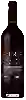
Winery Barmah Park WinesCape Schanck Reserve Shiraz
 Red wine
In the mouth this red wine is a powerful with a lot of tannins present in the mouth.
This wine generally goes well with poultry, beef or game (deer, venison).
Taste structure of the Cape Schanck Reserve Shiraz from the Winery Barmah Park Wines
Light | Bold | |
Smooth | Tannic | |
Dry | Sweet | |
Soft | Acidic |
In the mouth the Cape Schanck Reserve Shiraz of Winery Barmah Park Wines in the region of Victoria is a powerful with a lot of tannins present in the mouth.
Food and wine pairings with Cape Schanck Reserve Shiraz
Pairings that work perfectly with Cape Schanck Reserve Shiraz



Original food and wine pairings with Cape Schanck Reserve Shiraz

The Cape Schanck Reserve Shiraz of Winery Barmah Park Wines matches generally quite well with dishes of beef, lamb or game (deer, venison) such as recipes of roast beef in a foie gras and chanterelle crust, lamb stew from my mum or pheasant casserole with cabbage.
Details and technical informations about Winery Barmah Park Wines's Cape Schanck Reserve Shiraz.
Discover the grape variety: Corinthe
Would find its first origins in the islands of the Greek archipelago. According to a study conducted in collaboration with SupAgro-Montpellier (Hérault), it would be a relative of the pedro ximénes, for more information click here ! It can be found in Greece, Australia, South Africa, the United States (California), ... hardly cultivated in France except among a few amateur gardeners. In Italy, it is vinified to serve as a base for the production of many vermouths.
Informations about the Winery Barmah Park Wines
The Winery Barmah Park Wines is one of of the world's greatest estates. It offers 5 wines for sale in the of Heathcote to come and discover on site or to buy online.

The wine region of Heathcote
The wine region of Heathcote is located in the region of Central Victoria of Victoria of Australia. Wineries and vineyards like the Domaine Wild Duck Creek Estate or the Domaine Wild Duck Creek Estate produce mainly wines red and white. The most planted grape varieties in the region of Heathcote are Cabernet franc, Malbec and Vermentino, they are then used in wines in blends or as a single variety. On the nose of Heathcote often reveals types of flavors of cream, cigar or forest floor and sometimes also flavors of aniseed, pencil shavings or dried fruit.
The wine region of Victoria
Victoria is a relatively small but important Australian wine state. Located in the Southeastern corner of the continent, with a generally cool, ocean-influenced Climate, Victorian wine is remarkably diverse, producing all sorts of wines and styles in different climates. In all, the state covers almost 250,000 square kilometres (over 90,000 square miles) of land (almost the same Size as the US state of Texas), well under a quarter the size of its western neighbour, South Australia, and less than a third the size of New South Wales to the North. As such, Victoria's size - and to some extent, the state's viticultural history - can defy generalization.
The word of the wine: Clear
Said of a wine that is clear and brilliant in colour and contains no suspended matter.