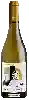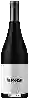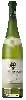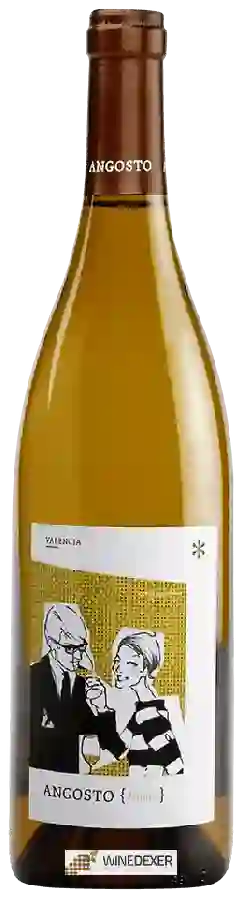
Winery El AngostoBlanco
 White wine



This wine is a blend of 2 varietals which are the Chardonnay and the Verdejo.
This wine generally goes well with pork, vegetarian or poultry.

Wine flavors and olphactive analysis




On the nose the Blanco of Winery El Angosto in the region of Valence often reveals types of flavors of non oak, earth or microbio and sometimes also flavors of tree fruit, citrus fruit or tropical fruit.
Food and wine pairings with Blanco
Pairings that work perfectly with Blanco



Original food and wine pairings with Blanco



The Blanco of Winery El Angosto matches generally quite well with dishes of pork, rich fish (salmon, tuna etc) or shellfish such as recipes of paupiettes with tomato sauce, leek and tuna pie or mussels with beer.
Details and technical informations about Winery El Angosto's Blanco.
Discover the grape variety: Chardonnay
Whites with many faces: mineral and taut at Chablis (lemon, green apple, flint), opulent and buttery at Meursault and Puligny-Montrachet (hazelnut, brioche, yellow fruits), tense and chalky in Champagne (Blanc de Blancs). Also vinified sparkling and widely exported (Sonoma, Margaret River, Casablanca). A Burgundian variety, a cross of Pinot Noir × Gouais Blanc, half-sibling of Aligoté.
Last vintages of this wine
The best vintages of Blanco from Winery El Angosto are 2008, 2017, 2016, 2015 and 2014.
Informations about the Winery El Angosto
The Winery El Angosto is one of of the world's greatest estates. It offers 21 wines for sale in the of Valence to come and discover on site or to buy online.

The wine region of Valence
Sunny Mediterranean Levant, sun-drenched accessible wines. Monastrell (Mourvèdre) star red in Alicante: fleshy and deep with black fruits, garrigue, leather and spice, firm tannins. Round, fruity Bobal from Utiel-Requena, supple Garnacha, juicy Tempranillo. Fresh whites: light Merseguera, aromatic Moscatel (fresh grape, flowers).
The word of the wine: Premier cru
In Burgundy, third level of classification (above the regional and communal appellations), designating the wines produced on delimited parcels (climats) whose name is added to the communal appellation. The climats classified as first growths are 635.