The Winery Albus of Rheingau
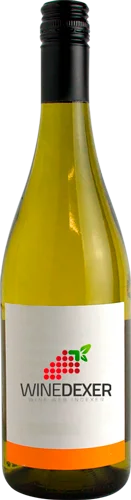
The Winery Albus is one of the best wineries to follow in Rheingau.. It offers 7 wines for sale in of Rheingau to come and discover on site or to buy online.
Looking for the best Winery Albus wines in Rheingau among all the wines in the region? Check out our tops of the best red, white or effervescent Winery Albus wines. Also find some food and wine pairings that may be suitable with the wines from this area. Learn more about the region and the Winery Albus wines with technical and enological descriptions.
How Winery Albus wines pair with each other generally quite well with dishes of pork, shellfish or spicy food such as recipes of endives au gratin without béchamel sauce, spaghetti with clams or curried coral lentils.
In the mouth the white wine of Winery Albus. is a with a nice freshness.
Rheingau is one of the most important of Germany's 13 Anbaugebiete wine regions. However it is far from the biggest; with 3,076 hectares (7,600 acres) of Vineyard">Vineyards documented in 2012, its output is around one tenth of that from the Pfalz and Rheinhessen regions. Located on the Rhine a 20-minute drive west of Frankfurt, the -gau suffix denotes that it was once a county of the Frankish Empire.
The classic Rheingau wine is a DryRiesling with pronounced Acidity and aromas of citrus fruits and smoke-tinged minerality – typically more "masculine" than its equivalent from the Mosel.
It is worth noting, however, that the region also produces some of Germany's very finest Sweet, botrytized Rieslings, with flavors as exotic as apricot purée, honey and caramelized mandarin. Now atypical (yet still a fascinating Part of the region's wine history), is the sweet Spätburgunder (Pinot Noir) once widely produced in Assmannshausen until the late 20th Century.
After flowing roughly northwards for 280 kilometers (175 miles), the Rhine turns suddenly westwards for 25 kilometers (15 miles) between Wiesbaden and Rudesheim. It is here, on the river's northern, south-facing banks, that 90 percent of Rheingau vineyards are located.
The remaining 10 percent are divided into two sections: the flat land around Hochheim (along the Main river just before its confluence with the Rhine), and the perilously steep slopes between Assmannshausen and Lorch.
The Rhine is of vital importance to many German vineyards, the vast majority of which are located within just a few miles of it. Here in the Rheingau the river's benefits are at their most obvious; not only does it reflect sunlight onto the vineyards above, it also helps to moderate temperatures to a certain extent, providing a few extra frost-free weeks at either end of the growing season. The most visible benefit, however, are the gentle south-facing slopes the river has carved into the landscape here.
Planning a wine route in the of Rheingau? Here are the wineries to visit and the winemakers to meet during your trip in search of wines similar to Winery Albus.
Belonging to the Estaing wines, the Saint Pierre doré is also called Roussellou. With an average budding, this variety is presented in the form of full, winged, elongated and very large bunches, with pulpy, spherical and medium-sized berries. When ripe, the fruit is golden-white in colour, with bronze leaves, which may be three-lobed or whole. The red colour is also found on the internodes of its herbaceous branch. For best results, a fairly long pruning will suit the Saint Pierre Doré, which is not overly afraid of oidium or mildew, but more afraid of grey rot. The characteristics of the roussellou mean that it could play a major role in the production of sparkling wines. The vine does indeed give a very acidic taste, not very sweet and with low degree aromas. It has been noted that the extent of the vineyard recorded in 1958 is 123 Ha, to be reduced to 1 Ha in 1994 on the French territory.