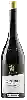
Winery ZollweghofUnikum
 Red wine


In the mouth this red wine is a powerful with a lot of tannins present in the mouth.
This wine generally goes well with beef, game (deer, venison) or lamb.
Taste structure of the Unikum from the Winery Zollweghof
Light | Bold | |
Smooth | Tannic | |
Dry | Sweet | |
Soft | Acidic |
In the mouth the Unikum of Winery Zollweghof in the region of Trentino-Alto-Adige is a powerful with a lot of tannins present in the mouth.
Food and wine pairings with Unikum
Pairings that work perfectly with Unikum



Original food and wine pairings with Unikum

The Unikum of Winery Zollweghof matches generally quite well with dishes of beef, pasta or lamb such as recipes of beef with onions chinese style, pasta with zucchini or doner kebab.
Details and technical informations about Winery Zollweghof's Unikum.
Discover the grape variety: Gold
Intraspecific crossing between A 3-94 (Hamburg Muscat x Sultana) and California K 3-78 (Hamburg Muscat x Queen of the Vines) obtained in the United States (California) in 1958 by Harold Paul Olmo (1909/2006). It can also be found in Greece, Cyprus, etc.
Last vintages of this wine

The best vintages of Unikum from Winery Zollweghof are 2017, 0
Informations about the Winery Zollweghof
The Winery Zollweghof is one of of the world's greatest estates. It offers 10 wines for sale in the of Trentino-Alto-Adige to come and discover on site or to buy online.

The wine region of Trentino-Alto-Adige
Trentino-Alto Adige is Italy's northernmost wine region, located right on the border with Austria. Production was once dominated by the local red varieties Lagrein and Schiava. Now white wines are becoming more important in terms of Volume. Increasingly, they are made from internationally renowned Grape varieties such as Pinot Grigio and Chardonnay.
The word of the wine: White Grenache
White grape variety cultivated mainly in Spain and a little in the south of France (southern Rhône valley, Languedoc-Roussillon). It is the white variety of Grenache noir. It is used in the blending of several white wines (dry wines or natural sweet wines) to which it gives richness, fatness and floral notes.