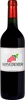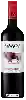
Winery ZainoManchuela Syrah
 Red wine


In the mouth this red wine is a powerful with a lot of tannins present in the mouth.
This wine generally goes well with poultry, beef or game (deer, venison).
Taste structure of the Manchuela Syrah from the Winery Zaino
Light | Bold | |
Smooth | Tannic | |
Dry | Sweet | |
Soft | Acidic |
In the mouth the Manchuela Syrah of Winery Zaino in the region of Castille is a powerful with a lot of tannins present in the mouth.
Food and wine pairings with Manchuela Syrah
Pairings that work perfectly with Manchuela Syrah



Original food and wine pairings with Manchuela Syrah

The Manchuela Syrah of Winery Zaino matches generally quite well with dishes of beef, lamb or game (deer, venison) such as recipes of alsatian bäckeoffe, lamb tagine with apricots (morocco) or duck legs with honey and orange.
Details and technical informations about Winery Zaino's Manchuela Syrah.
Discover the grape variety: Monbadon
Originally from the Charentes region, it is now endangered. It is still found in isolated stocks, most often in old ugni blanc plantations. This variety is said to be the result of a natural cross between folle blanche and ugni blanc. It is registered in the Official Catalogue of Vine Varieties, list A1. - Synonyms: frontignan des Charentes, aramon blanc by mistake in the Var, gros montils on the island of Oléron, ugni de Montpellier, burger (not to be confused with elbling and gouais blanc which have the same synonym), auba, meslier d'Orléans (not to be confused with meslier saint François) (for all the synonyms of the grape varieties, click here!)
Last vintages of this wine
The best vintages of Manchuela Syrah from Winery Zaino are 0
Informations about the Winery Zaino
The Winery Zaino is one of of the world's greatest estates. It offers 3 wines for sale in the of Castille to come and discover on site or to buy online.

The wine region of Castille
Castilla-La Mancha is a large region located South and east of the Spanish capital, Madrid. Inexpensive table wines are produced from a variety of Grapes. Higher quality wines are increasingly available, but the region is traditionally known as a source of low quality bulk wine. More than half of Spain's grapes are grown here.
The word of the wine: Performance
Quantity of grapes harvested per hectare. In AOC, the average yield is limited on the proposal of the appellation syndicate, validated by the Inao. The use of high-performance plant material (especially clones) and better control of vine diseases have increased yields. This is not without consequences on the quality of the wines (dilution) and on the state of the market (too much wine). We must not over-simplify: low yields are not synonymous with quality, and it is often in years with generous harvests that we find the greatest vintages (1982 and 1986 in Bordeaux, 1996 in Champagne, 1990 and 2005 in Burgundy...).