The Thüringer Weingut Zahn of Saale-Unstrut
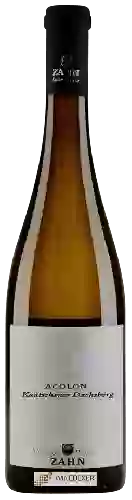
The Thüringer Weingut Zahn is one of the world's great estates. It offers 36 wines for sale in of Saale-Unstrut to come and discover on site or to buy online.
Looking for the best Thüringer Weingut Zahn wines in Saale-Unstrut among all the wines in the region? Check out our tops of the best red, white or effervescent Thüringer Weingut Zahn wines. Also find some food and wine pairings that may be suitable with the wines from this area. Learn more about the region and the Thüringer Weingut Zahn wines with technical and enological descriptions.
How Thüringer Weingut Zahn wines pair with each other generally quite well with dishes of lamb, pork or mature and hard cheese such as recipes of lamb tagine with prunes, bare-assed cockerel (ardennes) or cannelloni with zucchini.
Germany's northernmost region (Saxony-Anhalt), ~650 ha. Nordic whites that are dry, lively and mineral with signature notes of green apple, citrus, white flowers, fresh herbs and a crisp finish — a direct, thirst-quenching style. Dominant Muller-Thurgau (~22%) light and floral, Weissburgunder (Pinot Blanc) round and precise, herbaceous Silvaner and taut Riesling. Early grapes suited to the harsh continental climate.
Poor shell-limestone and red sandstone soils.
How Thüringer Weingut Zahn wines pair with each other generally quite well with dishes of pork, spicy food or mushrooms such as recipes of pizza calzone with ham and mushrooms, chicken wrap or pasta with ham.
On the nose the white wine of Thüringer Weingut Zahn. often reveals types of flavors of tree fruit. In the mouth the white wine of Thüringer Weingut Zahn. is a with a nice freshness.
Light, aromatic whites with a tender palate and moderate acidity, with muscat-like aromas of white flowers, apple, citrus, peach and honeyed notes. Made as easy dry whites, popular semi-dry wines and some sparkling cuvées. Widely planted in Germany (Rheinhessen, Baden), northern Italy (Alto Adige, Trentino), Austria, Switzerland, Hungary and Japan. Cross of riesling × madeleine royale created in 1882 by Hermann Müller in Geisenheim.
How Thüringer Weingut Zahn wines pair with each other generally quite well with dishes of pork, shellfish or spicy food such as recipes of pork roulades with cream and mushrooms, koskera hake (basque country) or thai shrimp soup (tom yam goong).
A natural compound contained in the skin of the grape, the seed or the woody part of the bunch, the stalk. The maceration of red wines allows the extraction of tannins, which give the texture, the solidity and also the mellowness when the tannins are "ripe". The winemaker seeks above all to extract the tannins from the skin, the ripest and most noble. The tannins of the seed or stalk, which are "greener", especially in average years, give the wine hardness and astringency. The wines of Bordeaux (based on Cabernet and Merlot) are full of tannins, those of Burgundy much less so, with Pinot Noir containing little.
How Thüringer Weingut Zahn wines pair with each other generally quite well with dishes such as recipes .
Structured, full-bodied dry whites with a slightly copper-tinged pale golden colour, ample palate and moderate acidity, showing signature aromas of yellow fruits (pear, peach, apricot), honey, smoke, almond and spiced notes. Also produced as off-dry and botrytised sweet wines. Makes great German-speaking whites in Germany (Baden, Palatinate), Austria, northern Italy (Südtirol) and Switzerland. German synonym for pinot gris, a French grey variety native to Burgundy.
Planning a wine route in the of Saale-Unstrut? Here are the wineries to visit and the winemakers to meet during your trip in search of wines similar to Thüringer Weingut Zahn.
Elegant, full-bodied dry whites with a pale golden color, ample palate and preserved fresh acidity, offering refined aromas of white fruits (apple, pear), almond, hazelnut, white flowers (acacia) and mineral notes (limestone, flint). Fine barrel-ageing and cellaring potential. Star of great German-speaking whites: Baden VDP, Palatinate VDP, Wachau DAC, Alto Adige DOC (as pinot bianco). German synonym for pinot blanc, a white-skinned mutation of pinot noir.