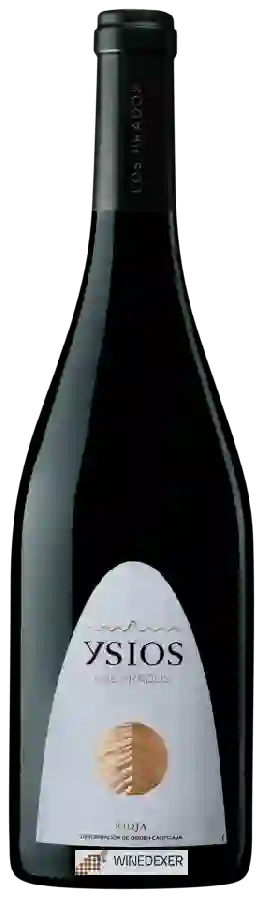
Winery YsiosLos Prados
 Red wine


In the mouth this red wine is a powerful with a nice balance between acidity and tannins.
This wine generally goes well with poultry, beef or veal.

Taste structure of the Los Prados from the Winery Ysios
Light | Bold | |
Smooth | Tannic | |
Dry | Sweet | |
Soft | Acidic |
In the mouth the Los Prados of Winery Ysios in the region of Rioja is a powerful with a nice balance between acidity and tannins.
Wine flavors and olphactive analysis



On the nose the Los Prados of Winery Ysios in the region of Rioja often reveals types of flavors of leather, non oak or earth and sometimes also flavors of oak, spices or red fruit.
Food and wine pairings with Los Prados
Pairings that work perfectly with Los Prados



Original food and wine pairings with Los Prados

The Los Prados of Winery Ysios matches generally quite well with dishes of beef, pasta or veal such as recipes of bernard's potée, cannelloni chicken, pepper and mozzarella or slow-cooked veal roast.
Details and technical informations about Winery Ysios's Los Prados.
Discover the grape variety: Madeleine-Sylvaner
Aromatic, lively dry whites with a pale golden robe, a supple palate with preserved acidity, and signature muscat-like aromas, white flowers and citrus notes. Early-ripening and productive. Grown on small areas in Germany and England, well adapted to northern viticultural climates. German white variety obtained in 1932 at Alzey by Georg Scheu (Madeleine angevine × Sylvaner).
Last vintages of this wine
The best vintages of Los Prados from Winery Ysios are 2013, 2015
Informations about the Winery Ysios
The Winery Ysios is one of of the world's greatest estates. It offers 17 wines for sale in the of Rioja to come and discover on site or to buy online.

The wine region of Rioja
Star of great Spanish reds: signature Tempranillo, elegant and complex, with notes of ripe cherry, plum, leather, vanilla and tobacco from American oak ageing. Classification by age: fruity Joven, balanced Crianza, ample Reserva, deep, silky Gran Reserva (5 years, 2 in barrel). Some fresh Viura whites and generous rosés. Spain's first DOCa (1991), 3 sub-zones (Alta, Alavesa, Oriental), 93.
The word of the wine: Severe
Said of a red wine that is generally young, very marked by tannins and astringent. See austere.




