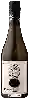
Winery Winzer KremsJunge Österreicherin
 Red wine


This wine generally goes well with pork, vegetarian or lean fish.
Food and wine pairings with Junge Österreicherin
Pairings that work perfectly with Junge Österreicherin



Original food and wine pairings with Junge Österreicherin



The Junge Österreicherin of Winery Winzer Krems matches generally quite well with dishes of pork, rich fish (salmon, tuna etc) or shellfish such as recipes of chicken bonne femme, skate wings with black butter sauce or festive sea pot.
Details and technical informations about Winery Winzer Krems's Junge Österreicherin.
Discover the grape variety: Argant
An ancient grape variety cultivated in Franche-Comté that has now almost disappeared. It was also found in Germany, Austria, Spain, etc. Genetic analyses show it to be related to Caesar. It should not be confused with bruneau noir, which has the synonym argant.
Last vintages of this wine
The best vintages of Junge Österreicherin from Winery Winzer Krems are 0
Informations about the Winery Winzer Krems
The Winery Winzer Krems is one of of the world's great estates. It offers 77 wines for sale in the of Niederösterreich to come and discover on site or to buy online.

The wine region of Niederösterreich
Niederösterreich, or Lower Austria, is a wine region in the Northeast of Austria bordering Slovakia and the Czech Republic. It is the country's largest wine region, both geographically and in terms of production. There are around 28,000 hectares (69,000 acres) of vineyards. These are responsible for roughly half of Austria's total wine output.
The wine region of Weinland
Weinviertel DAC – whose name translates as "wine quarter" – is an appellation in Niederösterreich (Lower Austria). It is by far the largest Districtus Austriae Controllatus wine region in Austria. It was also the first Austrian wine region to be given that title, in 2002, with a DAC Reserve designation added in 2009. The designation applies only to white wines from the Grüner Veltliner Grape variety.
The word of the wine: Phylloxera
Aphid that came from America and ravaged European vineyards at the end of the 19th century. It lives on the roots of the vine, from which it pumps the sap. The only vines capable of resisting it had to be imported from the United States, and then grafted onto their root system the wood of traditional French grape varieties. Today, grafted vines are always planted.