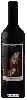
Winery WeinstockAlicante Bouschet
 Red wine



In the mouth this red wine is a powerful with a nice balance between acidity and tannins.
This wine generally goes well with poultry, beef or veal.
Taste structure of the Alicante Bouschet from the Winery Weinstock
Light | Bold | |
Smooth | Tannic | |
Dry | Sweet | |
Soft | Acidic |
In the mouth the Alicante Bouschet of Winery Weinstock in the region of California is a powerful with a nice balance between acidity and tannins.
Food and wine pairings with Alicante Bouschet
Pairings that work perfectly with Alicante Bouschet



Original food and wine pairings with Alicante Bouschet

The Alicante Bouschet of Winery Weinstock matches generally quite well with dishes of beef, lamb or veal such as recipes of chicken, beef and lamb couscous (morocco), oriental stew with couscous or filet mignon of veal with cider.
Details and technical informations about Winery Weinstock's Alicante Bouschet.
Discover the grape variety: Mérille
Originally from the Tarn-et-Garonne, the merille is a member of the cotoïdes family. It has long occupied the vineyards of Bergerac. It is often planted with négrette N or côt N. Nowadays, it is only grown on a hundred hectares in all. The young leaves of the Merille are heart-shaped. Its bunches are larger than average. The berries are bluish-black in colour and are also large and tightly packed. Merillas are associated with a regular and high production. It is often exposed to attacks by grape worms, leafhoppers and mites. It also fears grey rot but is not very sensitive to powdery mildew and mildew. This variety has 3 approved clones, not yet multiplied, namely 790, 445 and 444. It does not like soils with excessive humidity. It buds early and ripens later. Merille produces a light, not very aromatic, flat and simple wine.
Last vintages of this wine
The best vintages of Alicante Bouschet from Winery Weinstock are 0
Informations about the Winery Weinstock
The Winery Weinstock is one of of the world's greatest estates. It offers 18 wines for sale in the of California to come and discover on site or to buy online.

The wine region of California
California is the largest and most important wine region in the United States. It represents the southern two-thirds (850 miles or 1,370 kilometers) of the country's west coast. (Oregon and Washington make up the rest. ) The state also spans nearly 10 degrees of latitude.
The word of the wine: Biodynamic (agriculture)
Organic agriculture is part of a vision of the world linking the plant and all living beings to the cosmos and basing work in the vineyard and the cellar on the cycles of the moon.