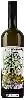
Weingut SchuhGB Grauburgunder Meissner Klausenberg
 White wine


In the mouth this white wine is a .
This wine generally goes well with pork, cured meat or mushrooms.
Taste structure of the GB Grauburgunder Meissner Klausenberg from the Weingut Schuh
Light | Bold | |
Dry | Sweet | |
Soft | Acidic |
In the mouth the GB Grauburgunder Meissner Klausenberg of Weingut Schuh in the region of Sachsen is a .
Food and wine pairings with GB Grauburgunder Meissner Klausenberg
Pairings that work perfectly with GB Grauburgunder Meissner Klausenberg



Original food and wine pairings with GB Grauburgunder Meissner Klausenberg

The GB Grauburgunder Meissner Klausenberg of Weingut Schuh matches generally quite well with dishes of pork, spicy food or mushrooms such as recipes of quiche with bacon and gruyère cheese, pasta with shrimp or sauté of veal with carrots.
Details and technical informations about Weingut Schuh's GB Grauburgunder Meissner Klausenberg.
Discover the grape variety: Jurançon blanc
Mainly cultivated in the south-western part of France, white Jurançon is part of the Cognac and Armagnac grape varieties. It is not related to Jurançon Noir, even though it is quite similar. This grape variety comes from a cross with the white gouais and is in the process of disappearing. Its young leaves are bubbled and downy. The more mature ones have 5 lobes and a petiolar sinus. Jurançon Blanc has small, compact clusters and medium-sized berries. It is hardy and vigorous. Jurançon blanc is associated with an average budburst. This variety is upright. To avoid exhaustion, it is recommended to prune it short. Jurançon often suffers from gray mold, mildew and powdery mildew. Its maturity is early in the third period. In other words, this grape variety matures 20 days after Chasselas. The white wines obtained with white Jurançon are low in alcohol, acid and neutral. If they are distilled, the result is an eau de vie that is not very strong and not very marked.
Last vintages of this wine
The best vintages of GB Grauburgunder Meissner Klausenberg from Weingut Schuh are 0
Informations about the Weingut Schuh
The Weingut Schuh is one of of the world's great estates. It offers 25 wines for sale in the of Sachsen to come and discover on site or to buy online.

The wine region of Sachsen
Sachsen (Saxony) in eastern Germany is one of the world's Northernmost wine regions, located at a latitude of 51 degrees north. The roughly 493 hectares (1,218ac) of vines in the region are planted aLong a 25 mile (40km) stretch of the Elbe river valley, from Pillnitz near the city of Dresden, in a north-easterly direction to Diesbar-Seusslitz, just downstream of the city of Meissen. Despite its northerly location, Sachsen has a long history of viticulture, with the earliest documents of wine-growing around Meissen dating to 1161. Since Germany's reunification in 1990, great enthusiasm has gone into building and developing the Sachsen wine industry; there are many part-time growers and an enthusiastic local market.
The word of the wine: Alcohol content
Quantity of alcohol in wine and in all alcoholic beverages, expressed in degrees or as a percentage.