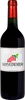
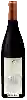
Weingut Eisenbach KornDornfelder Tradition
 Red wine



In the mouth this red wine is a .
This wine generally goes well with pork, poultry or veal.
Taste structure of the Dornfelder Tradition from the Weingut Eisenbach Korn
Light | Bold | |
Smooth | Tannic | |
Dry | Sweet | |
Soft | Acidic |
In the mouth the Dornfelder Tradition of Weingut Eisenbach Korn in the region of Mittelrhein is a .
Food and wine pairings with Dornfelder Tradition
Pairings that work perfectly with Dornfelder Tradition



Original food and wine pairings with Dornfelder Tradition

The Dornfelder Tradition of Weingut Eisenbach Korn matches generally quite well with dishes of pasta, veal or pork such as recipes of cannelloni with parma ham, stuffed veal breast or rabbit with hunter's sauce.
Details and technical informations about Weingut Eisenbach Korn's Dornfelder Tradition.
Discover the grape variety: Dornfelder
German, intraspecific cross made in 1955 by August Karl Herold (1902-1973) between the helfensteiner and the heroldrebe (more details, click here!). With these same parents he also obtained the hegel. The Dornfelder can be found in Switzerland, United Kingdom, Belgium, Germany, Austria, Czech Republic, Canada, United States, ... . Virtually unknown in France, we nevertheless recognize a certain interest in it due to its short phenological cycle and the quality of its wines, both rosé and red.
Last vintages of this wine
The best vintages of Dornfelder Tradition from Weingut Eisenbach Korn are 0
Informations about the Weingut Eisenbach Korn
The Weingut Eisenbach Korn is one of of the world's greatest estates. It offers 20 wines for sale in the of Mittelrhein to come and discover on site or to buy online.

The wine region of Mittelrhein
Mittelrhein is one of Germany's smaller wine regions, with around 468 hectares (1,156 acres) under Vine. A Long, thin region, it follows the course of the Rhine river between Rheinhessen/bingen">Bingen and Bonn, a distance of about 100 kilometers (60 miles) as the crow flies. At its Southern end, the region abuts the western edge of Rheinhessen and northern limits of the Nahe. It also intersects with the Mosel and Ahr regions, where their respective rivers Flow into the Rhine.
The word of the wine: Volatile acidity
Acidity resulting essentially from alcoholic fermentation and formed from acetic acids in the free state.